Table of Contents
ToggleParking tickets are expensive, annoying, and completely avoidable, especially when they’re for street cleaning violations. Yet thousands of homeowners find themselves scrambling to move cars at dawn or returning from errands to find a bright orange envelope tucked under their wiper blade. The culprit? Missing or misunderstanding their local street cleaning schedule. Whether someone just moved to a new neighborhood or has lived on the same block for years, staying on top of street cleaning days protects both their wallet and their sanity. This guide walks through everything needed to find schedules, decode confusing signage, and build a routine that keeps vehicles compliant without constant stress.
Key Takeaways
- Understanding your local street cleaning schedule prevents costly parking tickets ($35–$75) and helps keep your neighborhood cleaner and safer for everyone.
- Access your street cleaning schedule through municipal websites, mobile apps, public works departments, or by photographing street signs for easy reference.
- Build a personal routine by adding calendar reminders 30 minutes before restrictions, designating alternate parking spots, and using visual cues like dry-erase boards near your garage.
- Street cleaning signs follow a consistent format showing day, time window, and which side of the street is affected—decode them carefully to avoid violations.
- If you receive a street cleaning ticket, review the details for errors and contest it within 21–30 days with supporting evidence like photos or permit documentation.
- Clear your curb strip the night before cleaning day, coordinate with contractors, and communicate with neighbors to minimize disruption and comply with local regulations.
What Is a Street Cleaning Schedule and Why Does It Matter?
A street cleaning schedule is the published calendar or recurring timetable set by a municipality that dictates when mechanical sweepers will clear debris, leaves, and pollutants from public streets. Most cities require vehicles to be moved from designated sides of the street during these hours to allow sweepers full access to the curb lane.
These schedules aren’t arbitrary. Regular street cleaning reduces stormwater pollution by preventing trash and oils from entering drainage systems. It also improves air quality by removing particulate matter, maintains neighborhood aesthetics, and can even reduce rodent populations by eliminating food sources.
For homeowners, the practical impact is simple: park in the wrong spot on cleaning day, and expect a ticket. Fines typically range from $35 to $75 depending on the jurisdiction, and repeat offenses can escalate quickly. In some cities, vehicles may even be towed if they block cleaning routes during major seasonal sweeps.
Beyond avoiding fines, compliance helps the entire neighborhood. When everyone moves their cars, sweepers can do their job effectively, which means cleaner streets, fewer pests, and better curb appeal, factors that can indirectly support property values.
How to Find Your Local Street Cleaning Schedule
Finding the street cleaning schedule today or for the week ahead depends on the city, but most municipalities offer multiple lookup options.
Municipal websites are the primary source. Nearly every city with a street cleaning program hosts a searchable database or interactive map. Residents can enter their address or cross streets to pull up the exact schedule for that block. Some cities break schedules by zone, ward, or district, so it’s important to note which area applies.
Mobile apps have become increasingly common. Cities like Los Angeles, San Francisco, Chicago, and New York offer dedicated parking or street services apps that send push notifications the day before or morning of a cleaning event. These apps often include features like calendar integration and GPS-based reminders.
Call the public works or parking enforcement department if online tools aren’t available or if there’s confusion about irregular schedules. Staff can confirm dates, explain temporary changes, and clarify signage.
Printed mailers or community bulletins are still used in smaller towns or neighborhoods with seasonal cleaning programs. Homeowners should check mailboxes in early spring and fall, when many municipalities distribute annual schedules.
For those who prefer analog methods, walking the block and photographing street signs provides a reliable backup. Signs typically display the cleaning day, time window, and which side of the street is affected. Store the photos in a phone or print a reminder card for the fridge.
If a neighborhood uses alternate-side parking rules, the schedule may shift weekly or bi-weekly. Double-check whether the rotation follows a calendar pattern (e.g., “first and third Tuesday”) or a fixed weekly cycle.
Understanding Street Cleaning Signs and Regulations
Street cleaning signs can look like a foreign language, but they follow a consistent logic once decoded. Most signs include three key pieces of information: the day of the week, the time window, and which side of the street is restricted.
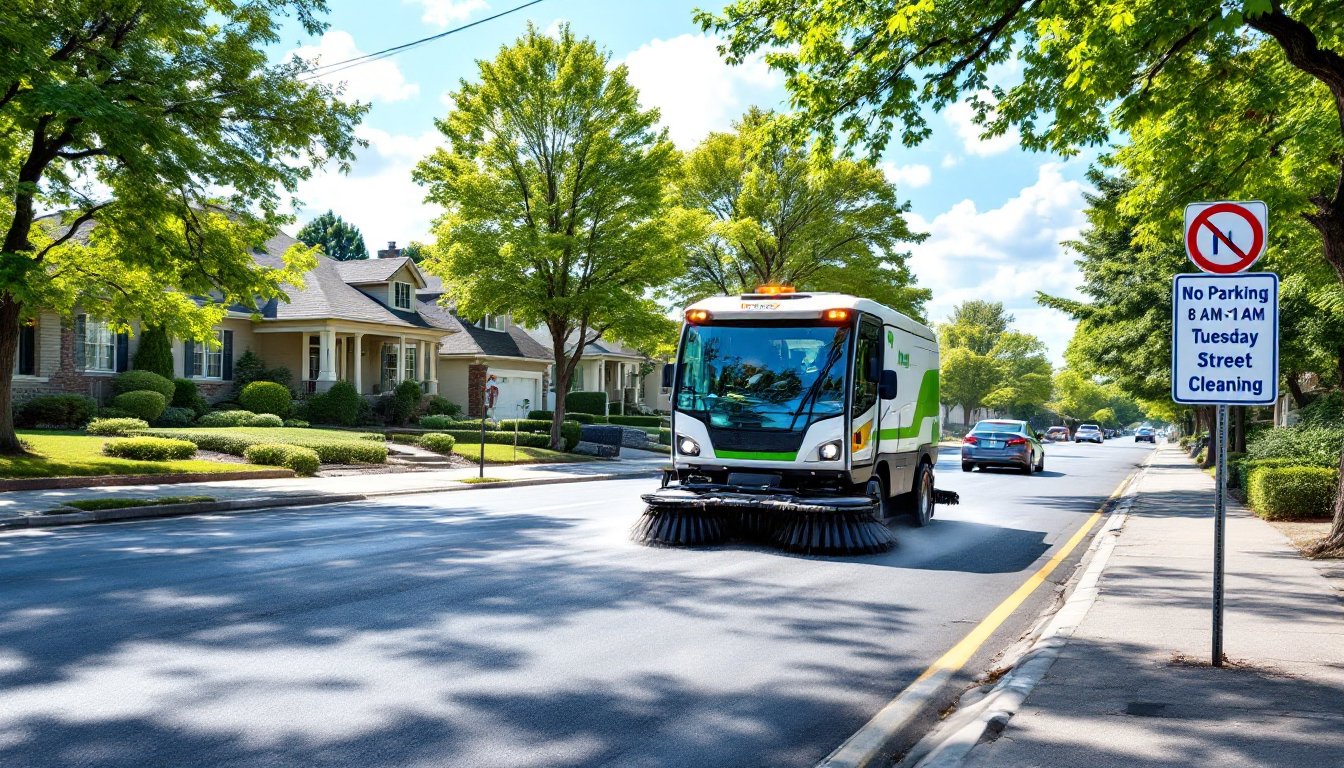
A typical sign reads something like “No Parking 8 AM–11 AM, Tuesday, Street Cleaning.” This means vehicles must be off that side of the street during the three-hour window every Tuesday. Some jurisdictions use arrows to indicate which direction the restriction applies, toward the sign, away from it, or both directions.
“Except by permit” language means residents with special parking permits (often issued for disabilities or residential zones) may be exempt, but this varies widely. Always verify with local parking enforcement before assuming an exemption applies.
Temporary signs are posted for special events, construction, or emergency cleaning. These override permanent signage and usually include specific dates. Municipalities are required to post temporary signs at least 24 to 72 hours in advance, depending on local ordinance.
Overlapping restrictions can be confusing. If a block has both street cleaning and permit parking rules, the most restrictive rule applies during that time window. For example, if street cleaning occurs Tuesday 9–11 AM and permit parking is required Monday–Friday 8 AM–6 PM, both rules are in effect Tuesday morning.
Some cities use color-coded signs or symbols to differentiate cleaning zones. Homeowners managing multiple properties around town may find approaches that reflect urban living guides useful for navigating varied municipal systems.
Know the grace period. Many cities enforce a strict “wheels up” policy, the vehicle must be gone before the start time, not during it. Returning at 10:58 AM for an 11 AM cutoff is risky: enforcement officers often ticket early.
Creating a Personal Street Cleaning Routine
Building a routine around street cleaning eliminates guesswork and reduces the mental load of remembering dates. Start by adding recurring calendar events to a phone or digital planner. Set the event for 30 minutes before the restriction begins, with a second reminder the night before.
For households with multiple drivers, create a shared calendar or group text thread dedicated to parking reminders. This is especially helpful when schedules vary by block or when visitors park overnight.
Designate alternate parking spots ahead of time. Scout nearby streets, garages, or lots that don’t have conflicting schedules. Some neighborhoods have informal “safe zones” where residents move cars during cleaning hours. Knowing these spots in advance prevents last-minute scrambles.
Batch errands on cleaning days. If the schedule falls on a weekday morning, plan grocery runs, appointments, or other tasks during the restriction window. The car’s already out, might as well make use of it.
For those who work from home or have flexible schedules, moving the car immediately after the sweeper passes is an option. Sweepers typically follow the same route and timing each week, so after observing the pattern a few times, it’s possible to move the car back within minutes.
Use visual cues. Hang a small dry-erase board near the garage door or entryway with the next cleaning date. Some homeowners place a brightly colored cone or note on the steering wheel the night before as a physical reminder.
Consider creating a DIY solution inspired by home organization techniques, such as a dedicated parking command center with a printed monthly schedule, magnet or sticker tracker, and backup contact numbers for local parking enforcement.
What to Do If You Get a Street Cleaning Ticket
If a ticket appears on the windshield, don’t ignore it. Parking citations accrue late fees and can eventually result in booting, towing, or holds on vehicle registration renewals.
First, check the ticket details carefully. Verify the date, time, location, and violation code match the actual circumstances. Errors in license plate numbers, street names, or timestamps are grounds for dismissal.
Most cities allow online or mail-in contests within 21 to 30 days of the citation date. Common defensible reasons include:
- Signage was missing, obscured, or damaged at the time of the violation
- The vehicle was legally parked in a permit zone or had a valid exemption
- The sweeper didn’t actually pass through (rare, but documented with time-stamped photos)
- The ticket was issued outside the posted restriction window
Attach supporting evidence: photos of signs, parking permits, GPS timestamps, or witness statements. Appeals are reviewed by hearing officers, not the issuing officer, so clear documentation matters.
If the ticket is valid, pay it promptly to avoid escalating fees. Many municipalities offer reduced fines for early payment (within 7–14 days) or payment plans for financial hardship.
Repeat offenders may face increased fines or administrative penalties. Some cities use license plate recognition systems to flag habitual violators, so establishing a solid routine (see previous section) is critical after the first ticket.
In rare cases where a vehicle was towed, contact the impound lot immediately. Towing and storage fees compound daily, often reaching several hundred dollars within a week. Retrieve the vehicle as soon as possible and contest the ticket separately if warranted.
Tips for Managing Street Cleaning Around Your Home
Street cleaning impacts more than just parking, it affects household routines, landscaping maintenance, and even curb appeal. Homeowners can take a few proactive steps to minimize disruption.
Clear the curb strip the night before. Move trash cans, yard waste bins, planters, or kids’ toys away from the street. Sweepers can’t clean effectively around obstacles, and some municipalities issue citations for blocking the curb zone.
Coordinate with landscapers or contractors. If a crew is scheduled to work on the property, confirm they’re aware of street cleaning days. Work trucks parked in violation can result in tickets billed to the homeowner or delays in project timelines.
Plan outdoor projects around the schedule. If painting trim, pressure washing siding, or working on the driveway, avoid scheduling these tasks on cleaning days. Materials, ladders, and equipment often spill into the street or parking lane, creating conflicts with sweepers.
Use the schedule as a reminder for your own outdoor cleaning. Many homeowners find it helpful to pair street cleaning days with their own curb and sidewalk maintenance, sweeping walkways, hosing down the driveway, or trimming hedges that overhang the sidewalk. Communities focused on DIY design and outdoor care often emphasize this kind of synchronized upkeep.
Communicate with neighbors, especially new residents. A quick heads-up about cleaning day can save someone from an expensive mistake. Some blocks use group chats or neighborhood apps to share reminders and updates.
For households with limited off-street parking, consider installing a gravel or permeable paver pad in the side yard (if local zoning allows). This provides a backup spot during cleaning hours without requiring costly garage construction. Always check setback and impervious surface regulations before breaking ground.
Conclusion
Street cleaning schedules are one of those invisible municipal systems that only become visible when ignored, and by then, it’s too late. But with the right tools and a simple routine, staying compliant is straightforward. Find the schedule, decode the signs, set reminders, and plan ahead. The effort takes minutes and saves hundreds of dollars in fines over time. Plus, it keeps the neighborhood cleaner and safer for everyone. That’s a trade-off any homeowner can get behind.