Table of Contents
ToggleStanding in ankle-deep water while shampooing your hair is nobody’s idea of a good shower. A clogged drain doesn’t just slow your morning routine, it creates a breeding ground for mildew and odors. Most shower drain clogs can be cleared without calling a plumber, and the fix usually takes less than 30 minutes with tools you already own. This guide walks through practical methods to clean a shower drain, from simple debris removal to natural drain treatments and mechanical clearing techniques.
Key Takeaways
- Most shower drain clogs caused by hair, soap scum, and mineral buildup can be cleared in under 30 minutes using tools you already own without hiring a plumber.
- Cleaning a shower drain with natural methods—baking soda, white vinegar, and hot water—effectively maintains drains and removes minor clogs without damaging pipes.
- A drain snake or zip-it tool provides mechanical removal for deeper clogs when natural methods fall short, making professional help unnecessary for most residential blockages.
- Regular monthly maintenance and use of a drain strainer stops hair before it enters the pipe and prevents the need for frequent deep cleaning.
- Call a professional plumber if multiple drains are backing up, the clog returns after repeated snaking, or you notice persistent sewer odors, as these indicate main line or structural issues beyond DIY repair.
Why Shower Drains Get Clogged
Hair is the number one culprit. A single shower can shed 50-100 strands, and those strands bind together as they travel through the trap. Add soap scum, body oils, and mineral deposits from hard water, and you’ve got a sticky mat that catches everything else flowing down the pipe.
Most clogs form in the P-trap, the curved section of pipe directly below the drain designed to hold water and block sewer gases. The curve naturally collects debris. In older homes, galvanized or cast-iron pipes can corrode over time, creating rough interior surfaces that snag hair more easily than smooth PVC.
Bar soap contributes more buildup than liquid body wash because it contains talc and other binders that leave residue. If you use a lot of conditioner or oil-based hair products, those coat the pipe walls and turn into a sticky film. Over months, that film hardens into a waxy layer that narrows the drain opening.
Prevention helps, but even diligent users eventually deal with slowdowns. A drain strainer or hair catcher stops most debris before it enters the pipe, but they require regular cleaning to stay effective. Without one, expect to clean your drain every few months depending on household size and hair length.
What You’ll Need to Clean Your Shower Drain
Gather these items before starting. Having everything on hand prevents mid-project trips to the hardware store.
Tools:
- Screwdriver (flathead or Phillips, depending on your drain cover)
- Flashlight or headlamp
- Needle-nose pliers or tweezers
- Drain snake (also called a closet auger) or a plastic zip-it tool
- Bucket or old towel
Materials:
- Rubber gloves (non-negotiable, this gets messy)
- Baking soda (1/2 cup)
- White vinegar (1/2 cup)
- Boiling water (kettle or large pot)
- Optional: enzymatic drain cleaner if natural methods don’t cut it
Safety gear:
- Gloves protect against sharp drain edges and whatever’s been growing in that trap
- Safety goggles if using chemical cleaners (avoid splashback)
Skip the chemical drain openers like Drano for regular maintenance. They’re harsh on pipes, especially older metal ones, and they don’t address the root problem. If the clog is severe, a snake works better. For routine cleaning and minor slowdowns, natural methods and mechanical removal do the job without damaging your plumbing.
Step-by-Step Guide to Cleaning Your Shower Drain
Remove the Drain Cover and Clear Visible Debris
-
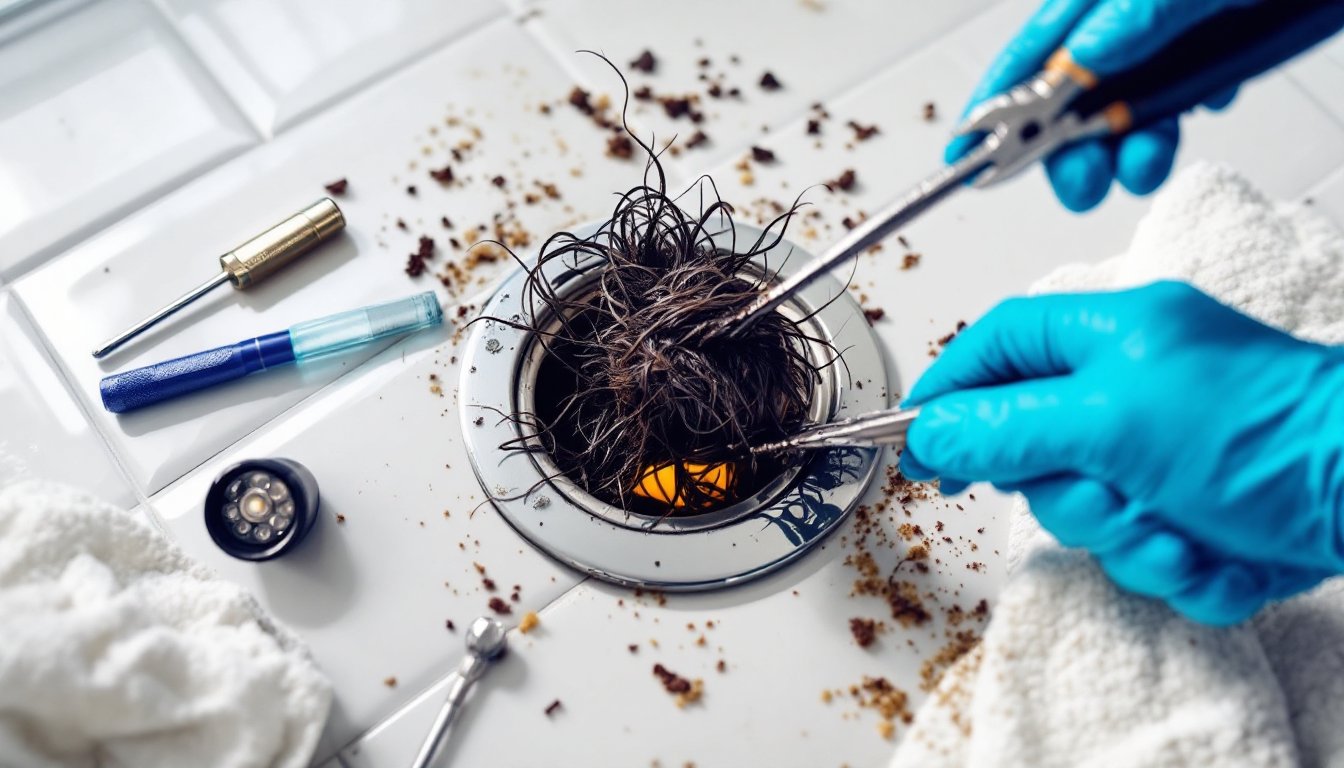
Remove the drain cover. Most covers lift straight out, but some are secured with a single center screw. Use the appropriate screwdriver and set the screw somewhere safe, they’re small and easy to lose in a wet shower.
-
Shine a flashlight down the drain. You’ll likely see a clump of hair, soap buildup, or both sitting just below the surface.
-
Pull out debris with needle-nose pliers or tweezers. Reach in and grab the visible mass. It’ll be slimy and unpleasant. Drop it directly into a plastic bag or onto paper towels to avoid dripping across the bathroom.
-
Wipe the drain cover and strainer. Soap scum and mineral deposits coat the cover over time. Scrub it with an old toothbrush and hot, soapy water. If there’s heavy buildup, soak it in white vinegar for 10 minutes, then scrub again.
-
Check for a removable drain basket. Some showers have a basket or secondary strainer beneath the cover. If yours unscrews or lifts out, clean that too. It’s often loaded with trapped hair.
This surface-level cleaning solves many slow-drain issues. If water still pools after removing visible debris, the clog is deeper in the trap.
Use Natural Cleaning Methods
Natural drain treatments break down organic buildup and deodorize without corroding pipes. They work best for maintenance and minor clogs, not full blockages.
-
Boil a kettle of water. Pour it slowly down the drain in two or three stages, pausing between pours. The heat melts soap scum and oils coating the pipe walls. Don’t use boiling water if you have PVC pipes that might be loose or damaged, stick to hot tap water instead.
-
Pour 1/2 cup of baking soda into the drain. Push it down as far as possible. Let it sit for 5 minutes so it coats the pipe.
-
Follow with 1/2 cup of white vinegar. It’ll fizz and bubble, that reaction helps lift grime. The combination isn’t a powerful solvent, but it’s effective for regular cleaning. Cover the drain with a wet rag to keep the reaction contained in the pipe.
-
Wait 15-30 minutes. For tougher buildup, let it sit up to an hour. The longer contact time gives the solution more time to work.
-
Flush with hot water. Run the shower for several minutes to rinse everything through. The drain should flow freely if the clog was minor.
Many homeowners swear by this method, and it’s one of the natural ways to maintain drains without harsh chemicals. Repeat monthly as preventive maintenance, especially if you have long hair in the household.
Try a Drain Snake or Zip Tool
When natural methods don’t clear the clog, it’s time for mechanical removal. A zip-it tool (a thin plastic strip with barbed edges) costs a few dollars and works for shallow clogs. A drain snake (or auger) reaches deeper blockages.
Using a zip-it tool:
- Insert the tool slowly into the drain, pushing past any resistance.
- When you’ve gone as far as it’ll reach (usually 18-24 inches), pull it back out slowly. The barbs catch hair and debris.
- Clean off the gunk and repeat until the tool comes out relatively clean.
- Flush with hot water.
Zip tools are one-time-use or good for a few cleanings before the barbs wear down. They’re perfect for renters or occasional users who don’t want to invest in a full snake.
Using a drain snake:
- Feed the snake’s cable into the drain, turning the handle clockwise as you push. You’re working it through the P-trap and into the horizontal drainpipe.
- When you hit resistance, you’ve reached the clog. Keep turning and pushing gently, the auger breaks up or hooks the blockage.
- If the snake bogs down, pull back slightly and try again. Don’t force it: you can damage the pipe.
- Once the cable moves freely again, slowly pull it back out. There will likely be hair and sludge wrapped around the tip.
- Run hot water for several minutes to clear loosened debris.
A basic 25-foot manual snake handles most residential shower drains. For recurring clogs or multiple bathrooms, it’s a worthwhile tool to own. Power augers exist, but they’re overkill for a shower drain and can damage pipes if misused.
Many DIYers find that a step-by-step approach with the right tools solves most drain problems without professional help. If the snake doesn’t break through after a few attempts, the clog may be farther down the line or caused by something other than hair and soap.
When to Call a Professional Plumber
Some drain problems are beyond DIY fixes. Call a licensed plumber if:
- Multiple drains are slow or backing up. This indicates a main line clog or sewer issue, not just a shower trap problem.
- Water backs up into other fixtures. If flushing the toilet causes the shower drain to gurgle or overflow, you’ve got a venting or main line problem.
- You’ve snaked the drain multiple times with no improvement. The clog may be in a section you can’t reach, or there’s a structural issue like a collapsed pipe or tree root intrusion.
- Foul sewer smell persists after cleaning. A dry P-trap, broken seal, or venting issue requires professional diagnosis.
- The drain was recently installed or remodeled. Improper slope, incorrect trap size, or code violations might be causing chronic slow drainage.
Professional plumbers use motorized augers, hydro-jetting (high-pressure water), and camera inspection to diagnose and clear tough clogs. Hydro-jetting is especially effective for buildup in older pipes but requires expertise to avoid damaging weakened sections.
If you’re renting, contact your landlord before attempting anything beyond surface cleaning. In many lease agreements, tenants are responsible for routine maintenance like hair removal, but deeper clogs caused by aging infrastructure fall on the property owner.
Homeowners dealing with frequent clogs should consider a plumbing camera inspection. It reveals pipe condition, identifies root intrusion, and spots bellies (sagging sections) that collect debris. The inspection costs $150-$300 in most markets but can prevent expensive emergency calls.
For general home care and maintenance strategies beyond plumbing, resources like The Spruce offer comprehensive guides across all aspects of home upkeep. Regular drain maintenance, monthly baking soda and vinegar treatments, weekly hair removal, and using a quality strainer, prevents most clogs before they start. When prevention fails, the mechanical methods covered here handle the rest. But knowing when to stop and call a pro protects your plumbing system and saves money in the long run.