Table of Contents
ToggleStreet cleaning schedules aren’t just a municipal nicety, they’re a legally enforced system that can cost residents hundreds of dollars in fines if ignored. Whether you’ve just moved into a new neighborhood or recently noticed unfamiliar parking signs on your block, knowing when street sweepers roll through your area saves money, reduces hassle, and keeps local storm drains clear of debris. Unlike typical home maintenance tasks that happen on your own timeline, street cleaning operates on a fixed schedule set by your municipality, and it’s the homeowner’s responsibility to track it.
Key Takeaways
- Knowing your street cleaning schedule by address protects your wallet, as citations for parking violations typically range from $35 to $75, with potential towing fees exceeding $300 in repeat offenses.
- Most municipalities offer searchable online tools and mobile apps where you can enter your address to instantly find your cleaning day, time window, and active months.
- Street cleaning signs must be carefully read for the day, time range, and applicable side of street—and if signs are missing or obstructed, document the issue with photos before contesting any citation.
- Set recurring calendar alerts with 12-hour and 1-hour warnings, and park on the opposite side the night before to avoid early-morning parking violations and enforcement officers arriving with sweeper trucks.
- If your street lacks posted cleaning information, contact your city’s public works department directly or check municipal ordinances, as unscheduled streets may be serviced seasonally or privately maintained by HOAs.
- Street cleaning serves critical infrastructure purposes by removing debris that clogs storm drains and contributes to flooding, making schedule compliance beneficial for your neighborhood’s overall maintenance.
Why Knowing Your Street Cleaning Schedule Matters
Street cleaning schedules directly impact your wallet and your vehicle’s safety. Municipal parking enforcement officers issue citations, typically ranging from $35 to $75 depending on the city, to any car parked during posted cleaning hours. In high-density urban areas like Los Angeles or San Francisco, repeat offenders can face escalating fines or even towing fees that exceed $300.
Beyond the financial hit, street cleaning serves a critical infrastructure purpose. Sweepers remove accumulated sand, leaves, glass, and oil residue that would otherwise clog storm drains and contribute to localized flooding. In regions with winter weather, this includes road salt and gravel that accelerates pavement deterioration if left in place.
For homeowners, the schedule also affects guest parking, contractor access during renovations, and delivery windows. If you’re planning a multi-day project that requires a dumpster permit or curbside material staging, coordinating around street cleaning days prevents conflicts with municipal regulations. Many cities require contractors to reposition equipment before sweeper routes begin, or risk having permits temporarily suspended.
How to Look Up Your Street Cleaning Schedule Online
Most municipalities now maintain searchable databases that tie cleaning schedules directly to street addresses. This is the fastest, most reliable method for confirming your specific route.
Using Your City’s Official Website or App
Start by navigating to your city’s Department of Public Works or Streets & Sanitation homepage. Look for a search tool labeled “Street Cleaning Schedule,” “Sweeping Routes,” or “Parking Restrictions.” Enter your full street address, including unit number if applicable. The system typically returns:
- Day of the week (e.g., “2nd and 4th Wednesday”)
- Time window (e.g., “8:00 AM – 12:00 PM”)
- Active months (some cities suspend cleaning in winter)
- Route map showing the sweeper’s path through your neighborhood
Many cities have also launched dedicated mobile apps. Examples include LA311 (Los Angeles), SF311 (San Francisco), and NYC311 (New York). These apps often include push notifications for upcoming cleaning days, temporary schedule changes due to holidays, and real-time sweeper tracking. Download the app, enable location services, and bookmark your address for instant access.
If the online tool shows “No street cleaning” or “Unscheduled,” your block may fall into a manually serviced zone or a lower-priority district swept on an as-needed basis. Contact the public works department directly to confirm.
Alternative Methods to Find Your Street Cleaning Days
When digital tools fall short, whether due to outdated municipal websites or rural areas with less robust online infrastructure, several offline methods provide reliable answers.
Call your city’s public works or parking enforcement office. Have your address ready. Staff can pull up route data and confirm whether your street is on a recurring schedule or serviced sporadically. This is especially useful if you live on a boundary between two cleaning zones.
Visit city hall in person. The clerk’s office or public works counter maintains printed route maps and can provide a physical schedule card. Some jurisdictions mail these cards to new residents automatically, but existing homeowners may need to request them.
Ask neighbors. Long-time residents often have cleaning days memorized or posted on their garage bulletin boards. This crowdsourced intel is particularly valuable for confirming unposted schedules or identifying seasonal changes not yet reflected online.
Check your property tax or utility bill insert. Some municipalities include annual street cleaning calendars as bill stuffers, similar to the way home organization reminders appear in seasonal mailers. Look for quarter-fold sheets with grid layouts showing week-by-week routes.
Review local ordinances. Your city’s municipal code, available online or at the public library, includes parking regulations tied to street maintenance. Search for sections titled “Street Sweeping” or “Temporary Parking Restrictions.” This approach is slower but definitive if disputes arise.
Understanding Street Cleaning Signs and Regulations
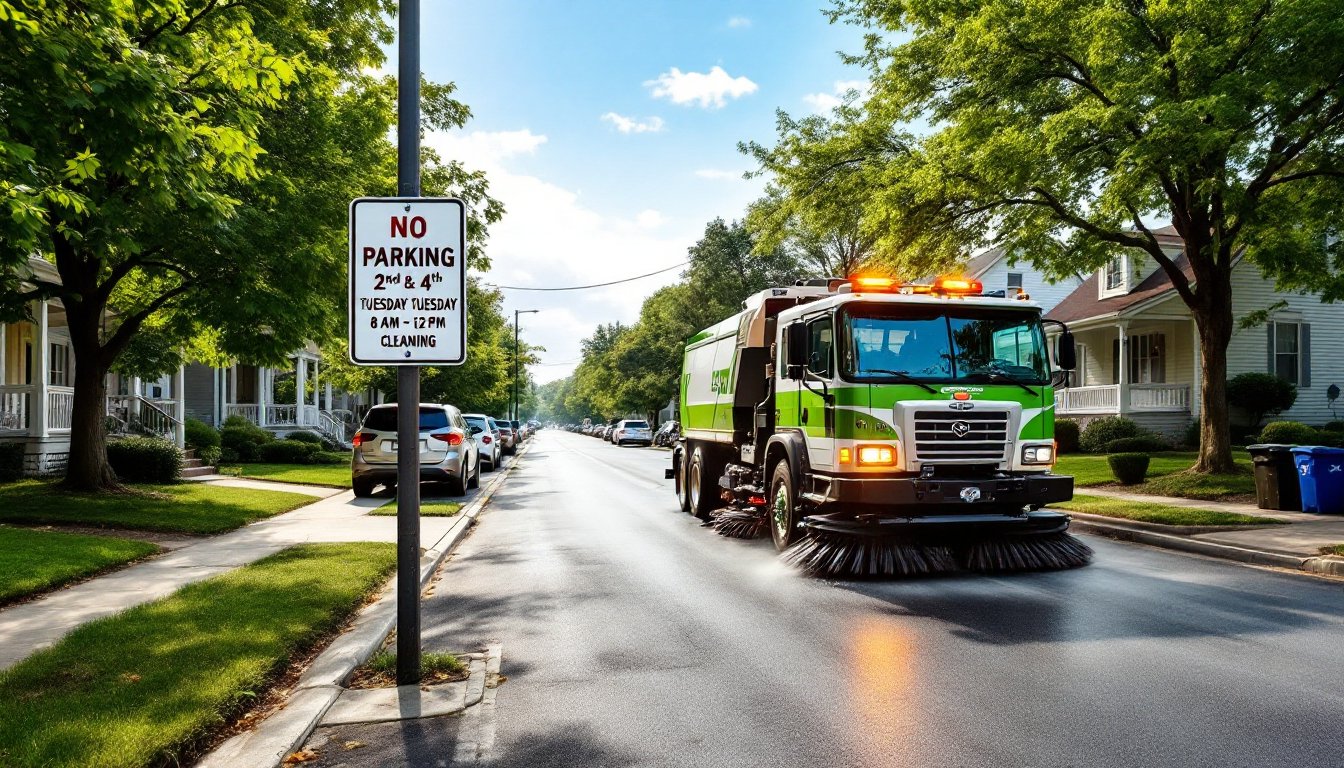
Street cleaning signs follow standardized formats, but local variations require careful reading. Most signs display:
- Day and frequency: “2nd & 4th Tuesday” or “Every Wednesday”
- Time range: “9 AM – 11 AM” (posted times are strictly enforced)
- Applicable side of street: Look for arrows indicating which side is restricted
The sign’s placement matters. It should be mounted within 100 feet of the regulated zone’s start point, and additional signs appear at mid-block intervals if the street exceeds 300 feet. If signs are missing, faded, or obstructed by vegetation, take timestamped photos and file a report with parking enforcement before the next scheduled cleaning. This creates a record if you later contest a citation.
Temporary signs with orange backgrounds or paper notices taped to poles indicate emergency or special event sweeping. These override regular schedules and are common after storms or during construction. They legally require only 24 to 48 hours of advance posting, depending on local ordinance.
“No Parking Anytime” signs combined with street cleaning notices mean the restriction is permanent and cumulative. Both rules apply.
In areas without posted signs but with known cleaning schedules (common in newer subdivisions), the municipality relies on mailed notices or online-only publication. Ignorance isn’t a valid defense for citations, so proactive lookup is essential, much like tracking seasonal home maintenance tasks that don’t come with physical reminders.
Tips to Avoid Street Cleaning Tickets and Fines
Prevention requires both planning and mechanical backups. Here’s how to stay ahead of enforcement:
Set recurring calendar alerts. Enter your street cleaning schedule into a digital calendar with alerts set for 12 hours and 1 hour before the restriction window begins. Include alternate parking options in the event description so you’re not scrambling at 7:55 AM.
Park on the opposite side the night before. If your side is cleaned on Tuesday mornings, move your car Monday evening. This eliminates early-morning rushes and accounts for overnight street parking bans in some cities.
Use physical reminders. Clip a laminated card with your cleaning schedule to your car’s sun visor or key hook. Low-tech solutions work when phones die or notifications get ignored.
Monitor city alerts for suspensions. Many cities suspend street cleaning on federal holidays or during severe weather. Subscribe to email or SMS alerts from your municipality’s public works department. These same services often notify residents of temporary road closures during moves or utility work.
Know the grace period rules. Some jurisdictions provide a 5-minute grace period after the posted start time before ticketing begins, but don’t rely on this. Enforcement officers often arrive with the sweeper truck, and printed citation times are rounded.
Contest illegitimate tickets immediately. If you have evidence the sign was obscured, the sweeper never passed, or your car was legally parked (e.g., displaying a valid disability placard), file a contest within the deadline printed on the citation, typically 21 days. Include photos, timestamps, and witness statements.
What to Do If Your Street Doesn’t Have Posted Cleaning Days
Unposted streets fall into three categories: unscheduled, privately maintained, or administratively overlooked.
Unscheduled streets are common in low-density suburban or rural areas where sweeping happens only after seasonal debris accumulation (e.g., post-leaf fall) or ahead of sealcoating and slurry work. Contact your public works department to confirm status and ask to be added to notification lists for ad hoc sweeps.
Privately maintained streets in HOA-governed communities or gated subdivisions operate outside municipal schedules. Check your homeowners association bylaws or contact the property management company. Private contractors often coordinate sweeping with landscaping services, so review community newsletters or online portals for advance notice.
Administratively overlooked streets occasionally occur when new construction or annexation hasn’t been integrated into sweeping route databases. If your block appears on city-maintained infrastructure (municipal water, streetlights) but lacks a cleaning schedule, file a service request through 311 or the public works office. Request written confirmation of your street’s status and save it in case of future parking disputes.
For all unposted situations, consider advocating for signage installation. A formal petition signed by multiple residents on the block carries more weight than individual requests. Include specific concerns, accumulated debris, drainage issues, or parking confusion, to strengthen your case.
If you’re a renter, your lease may require the landlord to provide parking and street maintenance information. This is standard language in multi-unit properties where tenants share common parking zones.