Table of Contents
ToggleEvery fall, homeowners face the same dirty job: gutters clogged with leaves, pine needles, and roof grit. The right ladder makes this task safer and faster, while the wrong one can lead to falls, frustration, or damaged gutters. Most gutter-related injuries stem from improper ladder use, wrong height, unstable footing, or poor positioning. This guide walks through ladder types, safety features, and setup techniques so homeowners can tackle gutter cleaning with confidence, not risk.
Key Takeaways
- Choose an extension ladder (24 feet) for two-story homes and a step ladder (8 feet) for single-story homes to ensure safe working height when gutter cleaning.
- A proper gutter cleaning ladder must have Type I or Type IA duty rating (250–300 pound capacity), non-slip feet, and standoff stabilizers to prevent falls and gutter damage.
- Follow the 1:4 angle rule for extension ladders—for every four feet of height, position the base one foot away from the wall—and avoid overreaching by repositioning every six to eight feet.
- Wear safety gear including work gloves, safety glasses, and non-slip boots, and use a fiberglass ladder near overhead power lines since aluminum conducts electricity.
- Maintain three points of contact while climbing, set up on firm level ground, and always have a second person foot the ladder during two-story gutter cleaning work.
Why Ladder Selection Matters for Gutter Cleaning
Gutter work puts unique demands on a ladder. Unlike painting or hanging Christmas lights, gutter cleaning requires constant repositioning, leaning into troughs, and handling wet debris while perched above ground. A ladder that’s too short forces dangerous overreaching. One that’s too tall becomes unwieldy and hard to reposition safely.
Stability trumps convenience. Gutters sit at eave height, typically 8 to 10 feet on single-story homes, 18 to 20 feet on two-story structures. The ladder must reach comfortably past the gutter line, allowing the user to work at chest height without standing on the top two rungs. According to seasonal maintenance guides, most gutter-related falls occur when homeowners stretch beyond their ladder’s safe working zone.
Weight capacity and material matter. Aluminum ladders offer portability but can flex under load. Fiberglass models provide rigidity and electrical insulation (critical near overhead service lines) but add weight. Most residential gutter work demands a Type I (250-pound capacity) or Type IA (300-pound capacity) rating to handle the user, tools, and a five-gallon bucket of wet debris.
The wrong ladder doesn’t just slow the job, it increases the odds of a trip to the ER. Selecting the right type and size upfront makes gutter cleaning a manageable chore instead of a risky ordeal.
Types of Ladders Best Suited for Gutter Cleaning
Not all ladders are built for gutter work. The two most practical options are extension ladders and step ladders, each suited to different home configurations.
Extension Ladders for Two-Story Homes
Extension ladders are the go-to for multi-story homes. These consist of two or three sections that slide to extend length, typically ranging from 16 to 40 feet. For a standard two-story house with gutters at 18 to 20 feet, a 24-foot extension ladder is ideal. Fully extended, it reaches the gutter line while maintaining the critical 1:4 angle ratio, for every four feet of ladder height, the base should sit one foot from the wall.
Look for models with rope-and-pulley extension mechanisms and rung locks that prevent slippage. Aluminum models weigh 30 to 50 pounds, making them easier to reposition than fiberglass (50 to 70 pounds), but fiberglass resists electrical conductivity, a key consideration near service masts or overhead lines.
Standoff stabilizers (also called ladder horns) are essential accessories. These U-shaped brackets mount to the top of the ladder, spanning the gutter and resting against the wall or roofline. They prevent the ladder from crushing gutters and provide a wider, more stable footprint. Many DIY repair guides recommend standoffs as non-negotiable for gutter work.
Step Ladders for Single-Story and Ranch Homes
Step ladders work well for ranch-style homes and single-story structures where gutters sit 8 to 12 feet high. An 8-foot step ladder provides a safe working height of about 10 feet (standing on the third or fourth step from the top), which aligns with most single-story eaves.
Step ladders are self-supporting, so they don’t require a wall for stability, handy when working near landscaping, corners, or detached structures like garages. The A-frame design offers better lateral stability than extension ladders, reducing side-to-side wobble when reaching into gutters.
Platform step ladders add a wide top step (often 10 to 12 inches deep) that accommodates both feet, improving comfort and balance during longer cleanings. Some models include tool trays or bucket hooks, freeing both hands for scooping and bagging debris.
For homes with a mix of single- and two-story sections, a multi-position ladder offers flexibility. These articulating ladders reconfigure into step, extension, or scaffolding modes, though they’re heavier and pricier than dedicated single-purpose models.
Essential Safety Features to Look For
Gutter cleaning isn’t the time to borrow a wobbly garage-sale ladder. Modern safety features make a measurable difference in fall prevention.
Non-slip feet and stabilizers are baseline requirements. Look for rubberized or spiked feet that grip pavement, grass, or gravel. Some extension ladders include adjustable leveling feet for uneven ground, critical when working on sloped yards or driveways. Outrigger stabilizers (wing-like extensions at the base) widen the footprint and prevent side tipping.
Rung design affects footing. D-shaped rungs or those with serrated surfaces reduce slippage, especially when boots are wet or muddy. Avoid round rungs on older ladders: they fatigue feet faster and offer less purchase.
Duty rating communicates load capacity. Type III (200 pounds) is light-duty and unsuitable for gutter work. Stick with Type I (250 pounds) or Type IA (300 pounds) to account for body weight, a tool belt, a bucket of debris, and dynamic forces from shifting position.
Locking mechanisms prevent collapse. Extension ladders should have positive rung locks or gravity locks that engage automatically when extended. Step ladders need sturdy spreader braces that lock the A-frame open: never climb a step ladder that’s folded or only partially opened.
Electrical safety matters near overhead lines. If your home has overhead service lines near the roofline, choose a fiberglass ladder over aluminum. Aluminum conducts electricity: accidental contact with a live wire can be fatal. Fiberglass is non-conductive and worth the extra weight for homes with nearby power lines.
PPE isn’t optional. Wear work gloves to handle sharp debris and protect against cuts. Safety glasses or goggles shield eyes from roof granules and wasp nests. If working near trees or power lines, a hard hat adds a layer of protection. Non-slip boots with ankle support reduce the risk of twisted ankles during ladder dismounts.
How to Safely Set Up and Use Your Gutter Cleaning Ladder
Proper setup is half the battle. Rushing this step causes most ladder accidents.
Choose firm, level ground. Avoid soft soil, mulch, or grass that can shift under load. If the ground is uneven, use a ladder leveling tool or a wide plank beneath the low-side foot to stabilize the base. Never prop the base on bricks, cinder blocks, or other makeshift shims, they can slip.
Position at the correct angle. For extension ladders, follow the 1:4 rule: for every four feet of working height, move the base one foot away from the wall. A 16-foot ladder leaning against a wall should have its base four feet out. Too steep, and the ladder can tip backward: too shallow, and it may slide out.
Extend three feet past the roof edge if you need to step onto the roof. This provides a stable handhold for mounting and dismounting. Lock the extension mechanism and double-check that rung locks are fully engaged.
Attach standoff stabilizers to protect gutters and improve stability. These brackets rest against the siding or roofline, distributing weight and preventing the ladder from crushing the gutter trough. Secure the stabilizer arms tightly to avoid shifting mid-climb.
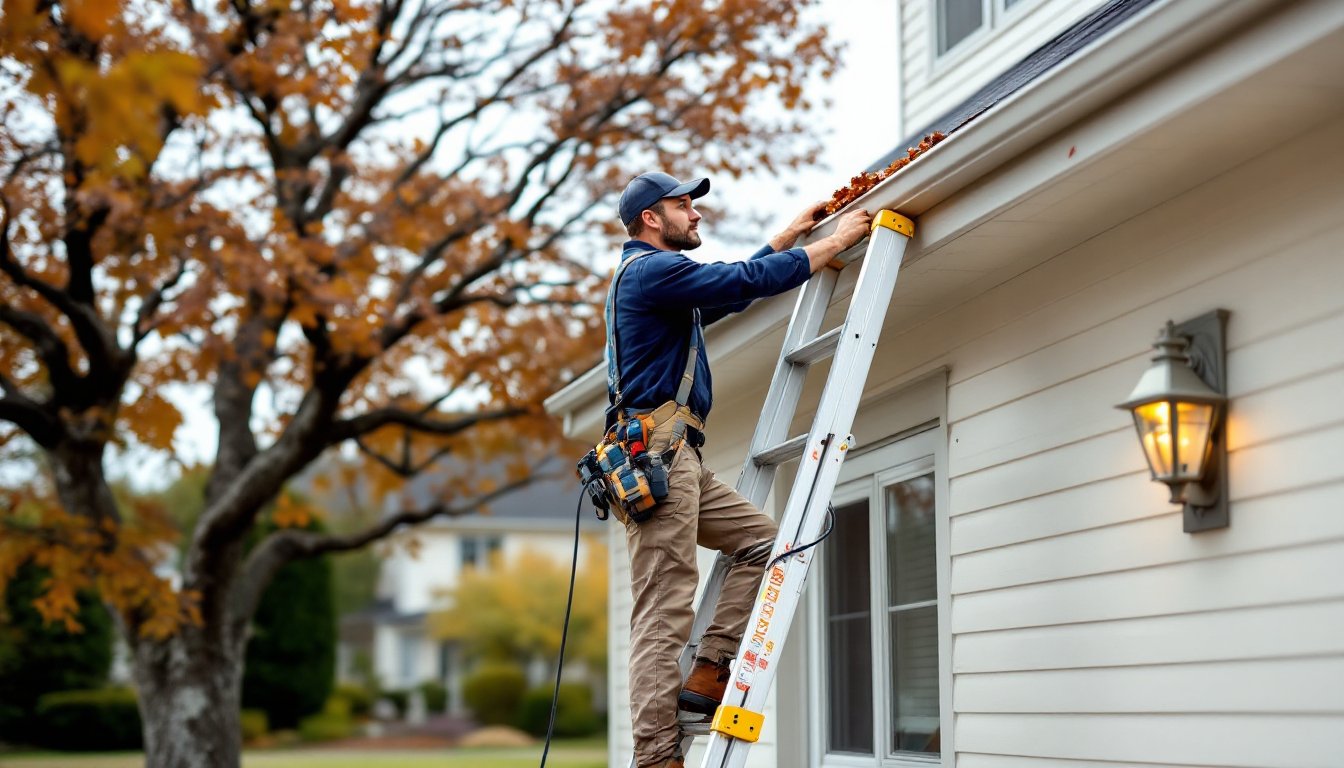
Maintain three points of contact while climbing and working. Two hands and one foot, or two feet and one hand should always be in contact with the ladder. Avoid carrying tools or buckets while climbing: use a tool belt or hoist supplies with a rope once you’re in position.
Don’t overreach. Keep your belt buckle between the ladder rails. If you can’t reach a section of gutter comfortably, climb down and reposition the ladder. Leaning sideways to extend reach is a leading cause of tip-overs. Many project tutorials stress that moving the ladder five extra times is safer than one dangerous stretch.
Work in sections. Clean a manageable span, typically six to eight feet, then descend and reposition. This keeps you centered over the ladder’s footprint and reduces fatigue.
Check the ladder before each use. Inspect rungs for cracks, bends, or corrosion. Test locks and hinges. Wipe off mud, oil, or debris from feet and rungs. A five-minute inspection can prevent a catastrophic failure mid-job.
Buddy up for two-story work. Extension ladder work on tall homes is safer with a second person to foot the ladder (stand at the base to prevent slippage) and hand up tools or buckets. If you’re solo, anchor the ladder at the base with stakes or sandbags in windy conditions.
Conclusion
Choosing the right gutter cleaning ladder isn’t about the fanciest features, it’s about matching tool to task. Extension ladders handle multi-story homes: step ladders suit single-story ranches. Prioritize duty rating, non-slip feet, and standoff stabilizers. Set up on firm ground, maintain the 1:4 angle, and reposition often instead of overreaching. Gutter cleaning is tedious, but with the right ladder and setup, it’s manageable and safe.