Table of Contents
ToggleIf you’re managing a commercial property, clogged gutters aren’t just an eyesore, they’re a liability. Standing water can damage roofing membranes, foundations, and siding, while ice dams in winter create slip hazards and potential structural issues. Unlike residential gutters that you might tackle on a Saturday afternoon, commercial systems often span multiple stories, require specialized equipment, and fall under OSHA regulations for fall protection. That’s why finding a reliable commercial gutter cleaning service near you isn’t optional: it’s essential risk management. This guide walks you through what to look for, how to vet providers, and what you should expect to pay in 2026.
Key Takeaways
- Commercial gutter cleaning near me is essential risk management for property owners, preventing foundation damage, ice dams, and costly liability claims from water overflow hazards.
- Legitimate commercial gutter cleaning services require proper equipment (boom lifts or truck-mounted vacuums), OSHA compliance, and at least $1–2 million in general liability insurance with your property as additional insured.
- Expect to pay $0.50–$1.50 per linear foot for commercial gutter cleaning, with costs varying based on building height, access challenges, and equipment requirements.
- Vet contractors by checking for 3+ years of commercial experience, calling references from similar properties, verifying current insurance and licensing, and reviewing recent Google Business or HomeAdvisor ratings for commercial work.
- Professional commercial gutter cleaning should include gutter cleaning, downspout flushing, debris removal and haul-away, a basic roof inspection, and documentation with photos or service reports for liability protection.
Why Commercial Gutter Cleaning Matters for Your Business Property
Commercial gutter systems handle significantly higher water volumes than residential setups. A single inch of rain on a 10,000-square-foot roof generates roughly 6,200 gallons of runoff. When gutters clog with leaves, debris, or wind-blown trash, that water has to go somewhere, usually into places you don’t want it.
Foundation damage tops the list of concerns. Water pooling around the building perimeter can undermine footings, cause basement flooding, and create hydrostatic pressure against foundation walls. On multi-story buildings, overflowing gutters can stain facades, rot wood trim, and accelerate corrosion on metal panels.
There’s also the ice dam problem. In cold climates, clogged gutters trap meltwater that refreezes at the roof edge, forcing water back under shingles or roofing membranes. This can void warranties and lead to interior leaks that damage inventory, equipment, and finishes.
From a liability standpoint, overflowing gutters create slip hazards below. If someone falls on ice formed by gutter overflow near your entrance, you’re looking at a premises liability claim. Regular cleaning, typically twice a year minimum, more often if you have mature trees nearby, keeps water flowing where it should and protects your investment.
What to Look for in a Professional Commercial Gutter Cleaning Service
Not all gutter cleaners are created equal, especially when it comes to commercial work. Here’s what separates the pros from the weekend warriors.
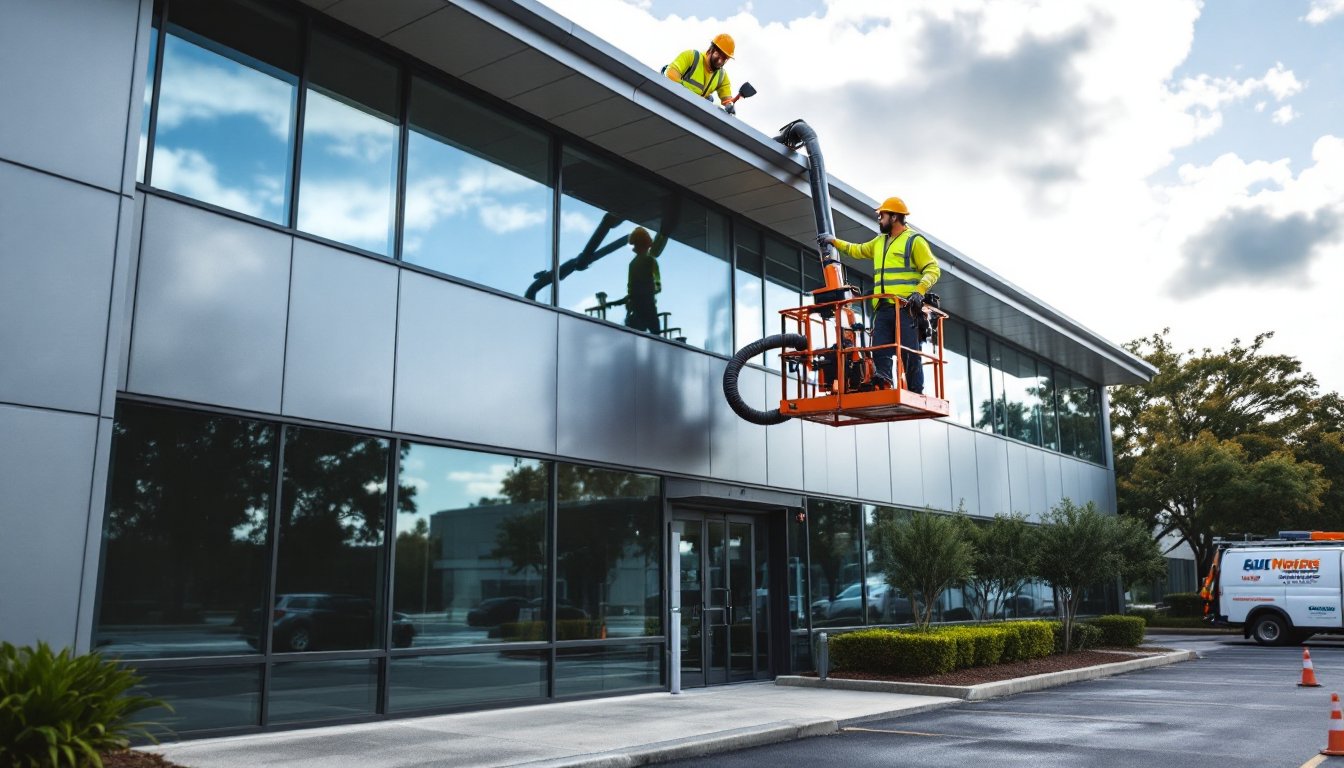
Equipment matters. Commercial jobs often require truck-mounted vacuum systems, lift equipment, or scaffolding. A crew showing up with extension ladders and a leaf blower might be fine for a single-story retail strip, but they’re not equipped for a three-story office building. Ask what equipment they use and whether it’s suitable for your building height and roof type.
Experience with commercial properties is non-negotiable. Commercial roofs, whether TPO, EPDM, built-up, or metal, require different handling than residential asphalt shingles. A good contractor knows not to drag hoses across a membrane roof or put ladder standoffs against fragile flashing.
Look for companies that offer comprehensive debris removal, not just pushing leaves off the roof. Debris should be bagged and hauled away, and downspouts should be flushed to confirm flow. Some services include a post-cleaning inspection report with photos, valuable documentation for property management records.
Licensing, Insurance, and Safety Certifications
This is where you separate legitimate commercial operators from fly-by-night outfits.
General liability insurance is baseline. The contractor should carry at least $1 million in coverage, preferably $2 million for commercial work. Ask for a certificate of insurance (COI) and verify it’s current. The COI should name your property as an additional insured for the duration of the work.
Workers’ compensation insurance protects you if a crew member gets hurt on your property. In most states, contractors with employees are required to carry it. If they don’t and someone gets injured, you could be on the hook.
OSHA compliance isn’t optional for commercial work. Any crew working above six feet must follow fall protection standards (29 CFR 1926.501). That means guardrails, safety nets, or personal fall arrest systems, not just a ladder and a prayer. Ask if the crew is OSHA-trained and whether they have a written safety plan.
Some contractors hold certifications from organizations like the National Safety Council or have completed fall protection training. It’s not legally required, but it signals a company that takes safety seriously. Platforms like Angi and similar review sites often include insurance and licensing verification, which can save you legwork.
How to Find the Best Commercial Gutter Cleaners in Your Area
Start with local commercial property managers and building owners. They deal with the same contractors repeatedly and know who shows up on time, does thorough work, and handles problems without drama. A referral from another property manager is worth more than a dozen online ads.
Online review platforms are useful but need context. Check HomeAdvisor and similar sites, but focus on commercial-specific reviews. A company with 500 glowing residential reviews but zero commercial experience isn’t what you need. Look for mentions of building type, crew size, and how they handled access or scheduling challenges.
Google Business listings can reveal a lot. Check how long they’ve been in business, read recent reviews (not just the top-rated ones), and see if they respond to complaints professionally. A company that’s been around for 10+ years and maintains consistent ratings is generally a safer bet than a brand-new operation.
Ask for references from similar properties. If you manage a medical office park, you want references from other commercial buildings, not suburban homes. Call those references and ask specific questions: Did they show up on time? Was the crew professional? Did they find and report any gutter or roof issues?
Local trade associations can also help. The National Association of Landscape Professionals (NALP) and regional property management associations often maintain vendor lists. Membership doesn’t guarantee quality, but it shows a contractor invests in their professional reputation.
Understanding Commercial Gutter Cleaning Costs and Pricing Factors
Commercial gutter cleaning pricing is more variable than residential work because every building is different. That said, you can expect to pay anywhere from $0.50 to $1.50 per linear foot of gutter, with higher rates for taller buildings or difficult access.
For a typical 10,000-square-foot single-story retail building with about 400 linear feet of gutter, you’re looking at roughly $200 to $600 per cleaning. A three-story office building with the same footprint might run $600 to $1,200 because of lift equipment, additional labor, and safety requirements.
Height is the biggest cost driver. Any work above two stories typically requires a boom lift or scaffolding, which adds $200 to $500+ in equipment costs alone. Buildings with parapets or internal drains are more labor-intensive and cost more than simple open-gutter systems.
Access challenges also matter. If the crew has to navigate a busy parking lot, work around tenants, or schedule after-hours, expect a premium. Properties with heavy tree cover may need more frequent service, but some contractors offer seasonal contracts (typically two to four cleanings per year) at a reduced per-visit rate.
Geographic location affects pricing. According to cost guides on sites like ImproveNet, urban markets and high-cost-of-living areas run 20-40% higher than rural or suburban regions. Get at least three quotes and compare not just price, but what’s included: debris removal, downspout flushing, minor repairs, inspection reports.
Beware of lowball bids. If one quote is half the others, it’s usually because they’re cutting corners on insurance, equipment, or thoroughness. Cheap gutter cleaning that misses half the debris or damages your roof isn’t a bargain.
Questions to Ask Before Hiring a Commercial Gutter Cleaning Company
Before you sign a contract or schedule service, ask these questions to separate the pros from the pretenders:
How long have you been doing commercial gutter cleaning? You want at least three years of commercial experience, not someone who just added it to their residential business.
What equipment do you use for buildings my size? For anything over one story, you should hear “boom lift,” “truck-mounted vacuum,” or “scaffolding,” not “extension ladders.”
Are you licensed, insured, and bonded? Ask for proof, a current general liability policy, workers’ comp certificate, and any required local business licenses.
What does your service include? It should cover gutter cleaning, downspout flushing, debris removal, and a basic inspection. Some companies also check for loose fasteners, damaged sections, or signs of roof issues.
Do you provide documentation after service? A dated, signed invoice is standard. Better companies provide photos or a brief report noting any issues found.
What’s your scheduling flexibility? Commercial properties often need service during off-hours or weekends to avoid disrupting tenants. Make sure the company can accommodate your needs.
Do you guarantee your work? Reputable contractors will return within a reasonable timeframe (usually 7-14 days) if a downspout backs up or a section was missed.
What happens if you damage something? Know the claims process upfront. A good contractor has clear procedures and responsive insurance.
Don’t skip these questions. The five minutes you spend vetting a contractor can save you thousands in liability or repair costs down the line.
Conclusion
Finding the right commercial gutter cleaning service comes down to doing your assignments. Verify insurance and licensing, check references from similar properties, and don’t let price be your only deciding factor. A crew that shows up with proper equipment, follows OSHA standards, and documents their work is worth paying for. Set up a regular maintenance schedule, twice a year minimum, and you’ll avoid the expensive headaches that come with neglected gutters.