Table of Contents
ToggleCleaning a home doesn’t have to feel like a weekend-long chore. With the right approach, anyone can maintain a spotless living space without sacrificing hours of free time. This guide covers everything from essential supplies to room-by-room strategies that actually work. Whether someone struggles to keep up with daily messes or wants to streamline their cleaning routine, these practical tips deliver results. A clean home improves mood, reduces stress, and creates a healthier environment for everyone inside it.
Key Takeaways
- Stock your cleaning caddy with essentials like an all-purpose cleaner, microfiber cloths, and a good vacuum to make every cleaning session more effective.
- Tackle kitchens and bathrooms weekly since grease, soap scum, and moisture create ideal conditions for bacteria growth.
- Dust from top to bottom—start with ceiling fans and shelves, then work down to floors—to avoid cleaning the same area twice.
- Create a cleaning schedule that divides tasks into daily (10-15 minutes), weekly, and monthly categories to maintain consistency without burnout.
- Use time-saving hacks like the two-minute rule and cleaning as you go to prevent small messes from becoming overwhelming chores.
- Keep cleaning supplies stored where you use them to eliminate wasted time walking back and forth during your routine.
Essential Cleaning Supplies You Need
Every effective cleaning routine starts with the right tools. Without proper supplies, even the most motivated person will struggle to get surfaces truly clean.
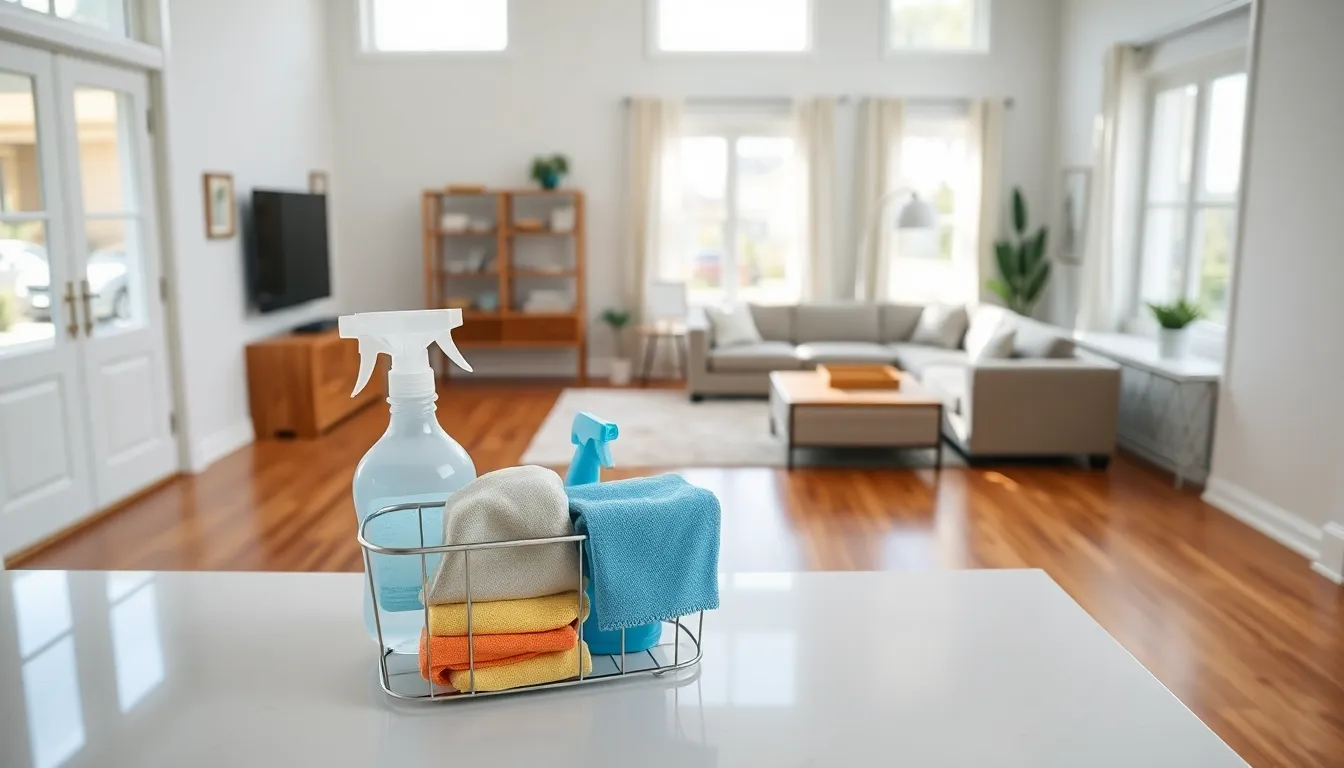
Here’s what belongs in every cleaning caddy:
- All-purpose cleaner: This handles countertops, appliances, and most hard surfaces. One good bottle replaces several specialty products.
- Glass cleaner: Streak-free windows and mirrors make any room look better instantly.
- Disinfectant: Bathrooms and kitchens need germ-killing power, especially on high-touch areas like doorknobs and faucet handles.
- Microfiber cloths: These grab dirt and dust without leaving lint behind. They’re reusable too, which saves money over time.
- Scrub brush: Some messes need a little muscle. A stiff-bristled brush works wonders on grout, tile, and stubborn stains.
- Vacuum cleaner: Carpets, rugs, and hard floors all benefit from regular vacuuming. A model with attachments helps reach corners and upholstery.
- Mop and bucket: Hard floors require wet cleaning to remove sticky residue and built-up grime.
- Rubber gloves: Protect hands from harsh chemicals and dirty water.
Buying quality cleaning supplies upfront saves frustration later. Cheap paper towels fall apart mid-wipe, and weak cleaners require multiple applications. Invest in products that perform well the first time.
Room-by-Room Cleaning Strategies
Different rooms collect different types of dirt. A one-size-fits-all approach won’t cut it. Smart cleaning means adjusting techniques based on each space’s unique challenges.
Kitchen and Bathroom Deep Cleaning
Kitchens and bathrooms demand the most attention because they see the heaviest use. Grease, food particles, soap scum, and moisture create perfect conditions for bacteria growth.
In the kitchen, start with the stove and oven. Grease splatters harden over time, so tackling them weekly prevents major buildup. Clean the inside of the microwave by heating a bowl of water with lemon juice for two minutes, steam loosens caked-on food. Wipe down cabinet fronts, which collect fingerprints and cooking residue that people often overlook.
The refrigerator needs cleaning every month or so. Remove expired items, pull out shelves, and wash them with warm soapy water. A clean fridge keeps food fresher longer.
Bathroom cleaning requires disinfecting toilet bowls, sinks, and shower surfaces. Soap scum builds up fast in showers, but a squeegee after each use prevents most of it. Scrub grout lines monthly to stop mold before it spreads. Don’t forget exhaust fans, they collect dust and lose effectiveness when clogged.
Living Spaces and Bedrooms
Living rooms and bedrooms accumulate dust, pet hair, and general clutter. These spaces feel overwhelming when neglected but respond quickly to regular attention.
Dust travels downward, so start high and work low. Hit ceiling fan blades, light fixtures, and shelf tops first. Then move to furniture surfaces and finally vacuum floors. This method prevents cleaning the same area twice.
Upholstered furniture traps allergens and odors. Vacuum cushions weekly and flip them to distribute wear evenly. Throw pillows and blankets should go through the wash monthly.
Bedrooms benefit from fresh linens every one to two weeks. Mattresses collect dead skin cells and dust mites, so vacuuming them quarterly helps. Rotate the mattress while you’re at it to extend its lifespan.
Clutter makes cleaning harder. Spend five minutes each evening putting items back where they belong. This small habit prevents major cleanup sessions later.
How to Create an Effective Cleaning Schedule
Consistency beats intensity when it comes to cleaning. A sustainable schedule prevents the dreaded weekend cleaning marathon that drains energy and motivation.
Break tasks into daily, weekly, and monthly categories:
Daily tasks (10-15 minutes total):
- Make beds
- Wipe kitchen counters after meals
- Load/unload dishwasher
- Quick bathroom sink wipe-down
- Pick up clutter
Weekly tasks (assign one room per day):
- Monday: Kitchen deep clean
- Tuesday: Bathrooms
- Wednesday: Dusting all rooms
- Thursday: Vacuuming and mopping
- Friday: Laundry and linens
- Weekend: Light touch-ups only
Monthly tasks:
- Clean refrigerator interior
- Wash windows
- Dust blinds and ceiling fans
- Scrub grout
- Wipe down baseboards
This structure spreads the workload evenly. No single day feels overwhelming, and the home stays consistently clean rather than cycling between spotless and messy.
Adjust the schedule based on household size and lifestyle. Families with kids or pets need more frequent floor cleaning. Someone living alone might stretch weekly tasks to every ten days.
Write the schedule down and post it somewhere visible. A cleaning checklist creates accountability and shows progress. Checking off completed tasks provides a small sense of accomplishment that builds momentum.
Time-Saving Cleaning Hacks
Working smarter makes cleaning less of a burden. These practical hacks cut time without cutting corners.
Set a timer: Giving yourself 15 minutes to clean one room creates urgency. Most people discover they can accomplish more than expected when racing the clock.
Clean as you go: Wipe the stovetop while dinner cooks. Spray shower cleaner before stepping out. These micro-cleaning moments prevent big messes from forming.
Use the two-minute rule: If a task takes less than two minutes, do it immediately. Hang up that coat. Rinse that dish. Put away those shoes. Small actions compound into major cleanliness.
Keep supplies where you use them: Store bathroom cleaning products under the bathroom sink. Keep kitchen cleaners near the kitchen. Walking back and forth to a central supply closet wastes time.
Embrace multi-tasking products: A good all-purpose cleaner handles most surfaces. Fewer products mean less decision fatigue and faster cleaning sessions.
Listen to something enjoyable: Podcasts, audiobooks, or upbeat music make cleaning feel less like work. Time passes faster when the brain stays engaged.
Declutter first, clean second: Picking up items before wiping surfaces prevents moving the same object multiple times. Clear the space, then clean it.
These hacks add up. Someone spending 30 minutes on cleaning might finish the same work in 20 minutes by applying just a few of these strategies.