Table of Contents
ToggleEvery home needs the right cleaning tools to stay fresh and organized. Without proper equipment, even simple tasks like mopping a floor or wiping down counters become frustrating chores. The good news? Building a solid collection of cleaning tools doesn’t require a huge budget or endless storage space.
This guide covers the essential cleaning tools every household should own. From everyday basics to specialized equipment for deep cleaning sessions, these recommendations will help anyone tackle dirt, dust, and grime with confidence. Whether someone is setting up their first apartment or upgrading their current supplies, the right tools make all the difference.
Key Takeaways
- Essential cleaning tools like microfiber cloths, quality brooms, and mops form the foundation of an effective cleaning routine.
- Invest in durable cleaning tools over cheap alternatives—a higher upfront cost often saves money and hassle long-term.
- Specialized tools like steam cleaners, grout brushes, and carpet spot cleaners tackle deep-cleaning tasks that everyday equipment can’t handle.
- Proper maintenance—including washing microfiber items without fabric softener and cleaning vacuum filters regularly—extends the lifespan of your cleaning tools.
- Choose cleaning tools based on your home’s surfaces, available storage space, and ergonomic needs to maximize efficiency.
- Store all cleaning tools in dry, ventilated spaces to prevent mold, bacteria buildup, and premature wear.
Must-Have Tools for Everyday Cleaning
Daily and weekly cleaning tasks require reliable, easy-to-use cleaning tools. These basics form the foundation of any cleaning routine.
Floor Cleaning Essentials
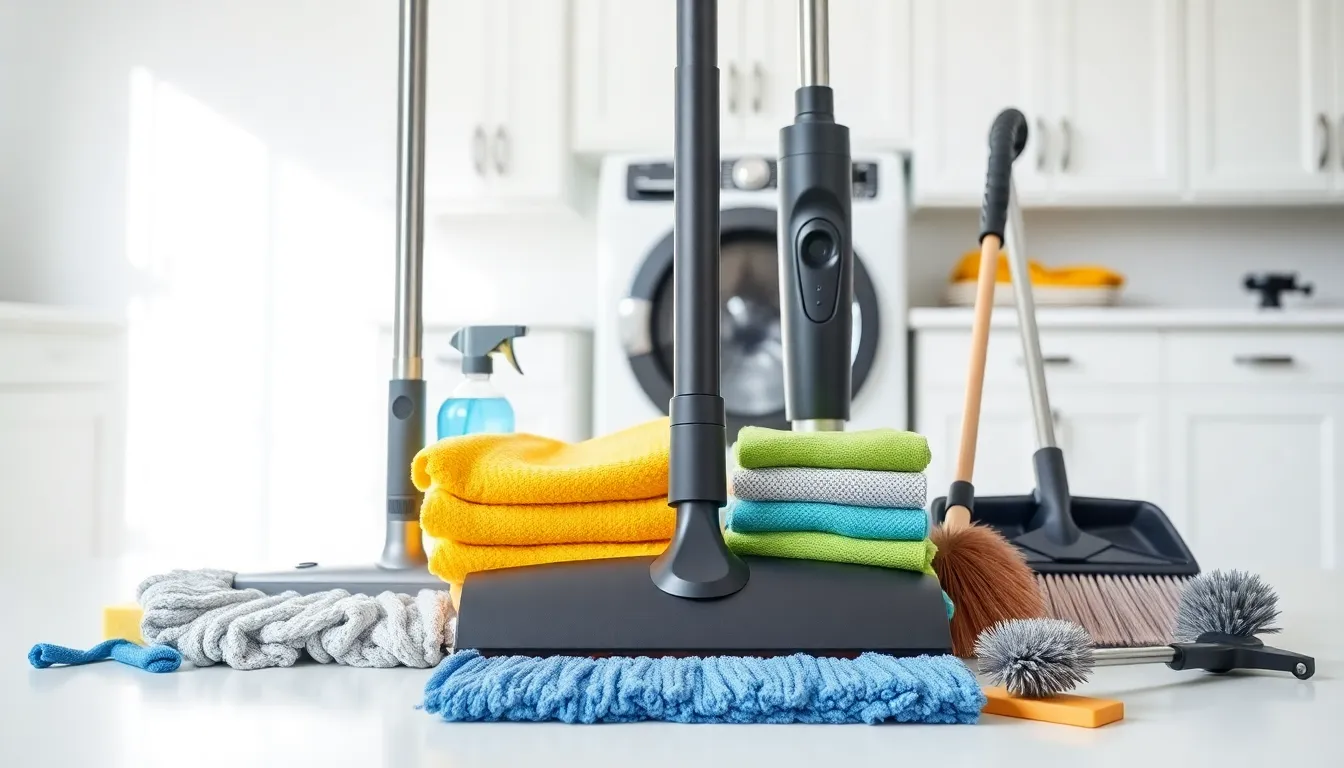
Floors take a beating. They collect dirt, pet hair, crumbs, and everything else that falls from daily life. A quality broom remains one of the most practical cleaning tools available. Look for one with angled bristles that reach into corners and along baseboards.
A vacuum cleaner handles what brooms miss. For homes with carpet, an upright vacuum with strong suction works best. Hardwood or tile floors benefit from a canister vacuum or a stick vacuum designed for hard surfaces. Many households find a cordless stick vacuum convenient for quick cleanups between deeper sessions.
Mops complete the floor-cleaning trio. Microfiber mops have largely replaced traditional string mops because they clean more effectively and dry faster. A spray mop with a refillable reservoir offers even more convenience, just spray and wipe without hauling a bucket around.
Don’t forget a dustpan. It sounds obvious, but a sturdy dustpan with a rubber edge makes sweeping far more effective than a cheap plastic one that lets debris slide underneath.
Surface and Dusting Tools
Surfaces throughout the home need regular attention. Microfiber cloths rank among the most versatile cleaning tools anyone can own. They trap dust and absorb spills without leaving streaks or lint behind. Keep a stack of them in different colors, one for kitchens, one for bathrooms, one for general dusting.
A good duster reaches places cloths can’t. Extendable dusters with flexible heads clean ceiling fans, light fixtures, and the tops of cabinets without requiring a ladder. Lambswool and microfiber options both work well, though microfiber dusters can be washed and reused.
Sponges and scrub brushes handle tougher jobs on countertops, sinks, and stovetops. Double-sided sponges with a soft side and an abrasive side offer flexibility. A small scrub brush with stiff bristles tackles grout and crevices.
Spray bottles filled with cleaning solutions round out the surface-cleaning arsenal. Having a few on hand, one for glass, one for all-purpose cleaning, one for disinfecting, speeds up the process considerably.
Specialized Tools for Deep Cleaning
Sometimes everyday cleaning tools aren’t enough. Deep cleaning sessions call for specialized equipment that handles stubborn messes and hard-to-reach areas.
A steam cleaner offers chemical-free cleaning power for tile, grout, and sealed hardwood. The high-temperature steam loosens grime and kills bacteria without harsh chemicals. Handheld steam cleaners work great for bathrooms, while larger units tackle floors and upholstery.
Carpet cleaners, whether rented or owned, remove deep-set stains and odors that vacuums leave behind. For homes with pets or kids, a compact carpet spot cleaner proves its worth after every accident.
A grout brush with stiff nylon bristles makes bathroom and kitchen tile look new again. Combined with a good cleaning solution, it removes mildew and soap scum that regular scrubbing misses.
Toilet brushes deserve more thought than most people give them. A brush with a holder that allows drying prevents bacteria buildup. Silicone toilet brushes have gained popularity because they’re easier to clean and don’t harbor germs like traditional bristle brushes.
Window squeegees produce streak-free glass that paper towels and cloths can’t match. Professional window cleaners swear by them for good reason, they work faster and deliver better results.
A pressure washer handles outdoor cleaning tasks like driveways, decks, and siding. While it’s a bigger investment, homeowners who tackle exterior cleaning themselves find it pays for itself quickly.
How to Choose the Right Cleaning Tools
With so many cleaning tools on the market, selecting the right ones can feel overwhelming. A few key factors simplify the decision.
First, consider the surfaces in the home. Hardwood floors need different tools than tile or carpet. Someone with mostly hard surfaces might skip a heavy-duty carpet cleaner in favor of a quality mop system.
Durability matters more than price. Cheap cleaning tools often fall apart within months, while quality options last years. A $30 mop that lasts five years beats a $10 mop replaced every six months, both in cost and convenience.
Storage space plays a role too. Small apartments benefit from compact, multi-purpose cleaning tools. A vacuum that converts from upright to handheld, for example, replaces two separate devices.
Ergonomics deserve attention, especially for anyone with back or joint issues. Lightweight vacuums, mops with adjustable handles, and tools with cushioned grips reduce strain during longer cleaning sessions.
Read reviews before buying. Real user experiences reveal problems that product descriptions hide. A vacuum might have great suction but terrible durability, or a mop might work beautifully until the pads wear out and replacements prove impossible to find.
Finally, think about maintenance requirements. Some cleaning tools need frequent filter changes, replacement pads, or special cleaning solutions. Factor these ongoing costs into the purchase decision.
Maintaining Your Cleaning Tools for Longevity
Even the best cleaning tools won’t last without proper care. A little maintenance extends their lifespan and keeps them working effectively.
Microfiber cloths and mop pads need regular washing. Machine wash them in warm water without fabric softener, which clogs the fibers and reduces their effectiveness. Air drying works best, though low-heat tumble drying is acceptable.
Vacuum cleaners require filter cleaning or replacement according to the manufacturer’s schedule. A clogged filter reduces suction and can damage the motor over time. Empty the dustbin or replace bags before they’re completely full, overstuffed containers strain the vacuum.
Broom bristles bend over time, especially if the broom is stored resting on them. Hang brooms or store them bristle-side up to maintain their shape.
Sponges harbor bacteria quickly. Wring them out completely after each use and replace them every two to four weeks. Running a damp sponge through the dishwasher or microwaving it for two minutes kills most germs, but replacement remains the safest option.
Brushes benefit from occasional soaking in warm, soapy water to remove buildup from bristles. Rinse thoroughly and let them dry completely before storing.
Store all cleaning tools in a dry, ventilated space. Moisture promotes mold and mildew growth, especially on cloth and natural fiber tools. A simple wall-mounted organizer keeps everything accessible while allowing air circulation.