Table of Contents
ToggleBuilding and construction trends 2026 are shaping up to transform how projects get designed, built, and operated. The industry stands at a turning point. Sustainability mandates are tightening. Labor shortages persist. And technology adoption is accelerating faster than many predicted.
This year brings real shifts, not just incremental updates. From prefabricated structures to AI-powered project management, construction firms face pressure to adapt or fall behind. The companies that understand these building and construction trends 2026 will position themselves for growth. Those that don’t? They’ll struggle to compete.
Here’s what industry professionals, developers, and stakeholders need to know about the construction landscape this year.
Key Takeaways
- Building and construction trends 2026 prioritize sustainability, with net-zero buildings and low-carbon materials becoming standard project requirements.
- Modular and prefabricated construction reduces on-site build time by 20-50% while improving cost predictability and quality control.
- Smart building technology, including IoT sensors and AI-powered maintenance, delivers energy savings of 15-30% in commercial projects.
- Automation tools like bricklaying robots and exoskeletons address skilled labor shortages while making construction careers safer and more attractive.
- Material innovations such as self-healing concrete and carbon-capture concrete are moving from experimental phases to real-world applications.
- Supply chain resilience strategies now include regional sourcing, larger inventories, and digital tracking tools to prevent disruptions.
Sustainable Building Practices Take Center Stage
Sustainability isn’t optional anymore. Building and construction trends 2026 show green practices moving from nice-to-have to must-have status.
Governments worldwide have introduced stricter emissions regulations. The European Union’s updated Energy Performance of Buildings Directive now requires all new buildings to be zero-emission by 2030. The U.S. is following with state-level mandates pushing similar goals. Construction firms must plan today for these requirements.
Net-zero buildings are becoming standard project specifications. Clients demand energy-efficient designs from the start. This includes passive heating and cooling systems, high-performance insulation, and on-site renewable energy generation.
Recycled and low-carbon materials are gaining market share. Mass timber construction continues its growth trajectory. Cross-laminated timber (CLT) structures now compete with steel and concrete for mid-rise buildings. The material stores carbon rather than releasing it during production.
Water conservation systems are standard in new designs. Rainwater harvesting, greywater recycling, and low-flow fixtures reduce consumption by 30-50% compared to traditional buildings.
Life cycle assessments influence material selection. Builders evaluate environmental impact from raw material extraction through demolition. This whole-building approach identifies hidden sustainability opportunities.
The Rise of Modular and Prefabricated Construction
Modular and prefabricated construction methods are reshaping project timelines and budgets. These building and construction trends 2026 address two persistent industry problems: speed and predictability.
Factory-built components reduce on-site construction time by 20-50%. Controlled manufacturing environments eliminate weather delays. Quality control improves because workers build in consistent conditions with specialized equipment.
Housing developers are leading adoption. Multi-family residential projects use volumetric modular units, complete rooms manufactured off-site. Hotels, student housing, and affordable housing projects benefit most from repetitive unit designs.
Healthcare construction is embracing prefabrication. Hospital bathroom pods, patient room headwalls, and mechanical systems arrive ready to install. This cuts project schedules and reduces disruption to existing hospital operations.
Cost predictability improves with off-site construction. Material waste drops by 10-15% in factory settings. Labor costs become more stable because skilled workers remain in one location rather than moving between job sites.
Design flexibility has improved significantly. Early modular projects looked identical. Today’s prefabricated buildings offer varied facades, floor plans, and finishes. Architects now design specifically for off-site manufacturing, optimizing both aesthetics and buildability.
Smart Technology Integration in Buildings
Smart building technology defines building and construction trends 2026. Digital systems now control everything from lighting to structural health monitoring.
Building Information Modeling (BIM) has become mandatory on most commercial projects. 3D digital twins track construction progress in real time. They continue serving facility managers throughout the building’s operational life.
IoT sensors monitor building performance continuously. Temperature, humidity, occupancy, and energy consumption data flow to central management systems. These systems adjust HVAC, lighting, and other systems automatically. Energy savings of 15-30% are common.
AI-powered predictive maintenance reduces equipment failures. Algorithms analyze sensor data to identify problems before they cause breakdowns. Elevator companies, HVAC manufacturers, and lighting suppliers offer these services as part of equipment packages.
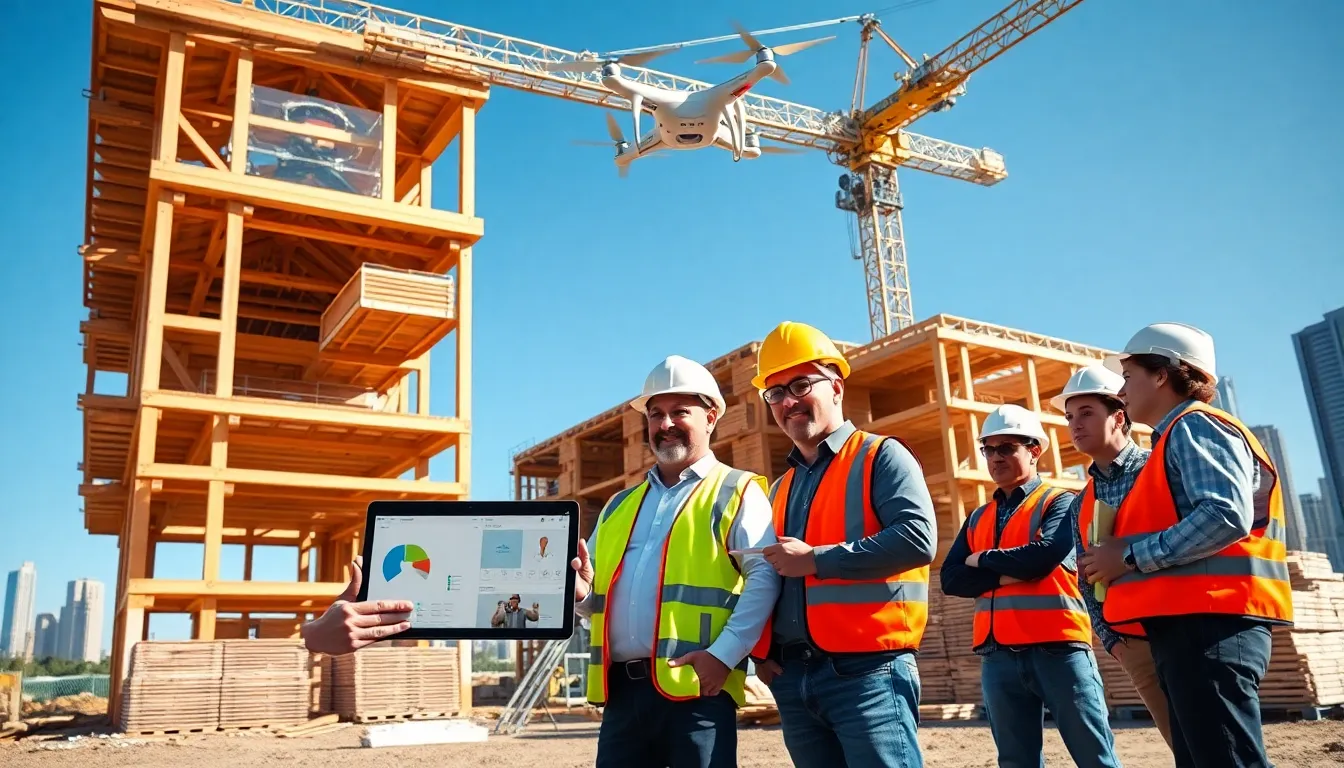
Construction sites use drone surveys and autonomous equipment. Drones capture site progress weekly, feeding data into project management software. Autonomous bulldozers and excavators handle repetitive earthmoving tasks.
Cybersecurity concerns grow alongside connectivity. Smart buildings create attack surfaces that didn’t exist before. Building and construction trends 2026 include increased investment in security protocols during design phases.
Workforce Evolution and Skilled Labor Solutions
Labor challenges continue shaping building and construction trends 2026. The skilled worker shortage hasn’t disappeared, but solutions are emerging.
Automation handles tasks humans struggle to fill. Bricklaying robots, concrete finishing machines, and automated rebar tying systems supplement human workers. These tools don’t replace craftspeople entirely. They handle repetitive tasks while humans focus on complex work.
Training programs are adapting to modern needs. Trade schools partner with technology companies to teach digital skills alongside traditional crafts. Workers learn BIM software, drone operation, and automated equipment management.
Immigration policies affect labor availability in many markets. Construction companies advocate for visa programs that bring skilled workers where domestic supply falls short.
Safety improvements help with recruitment. Exoskeletons reduce physical strain on workers’ bodies. Wearable sensors detect fatigue and environmental hazards. These technologies make construction careers more attractive to younger workers concerned about long-term health.
Diversity initiatives expand the talent pool. Women represent only 11% of construction workers in the U.S. Companies actively recruiting from underrepresented groups gain competitive advantages in hiring.
Material Innovation and Supply Chain Adaptations
Material science breakthroughs and supply chain restructuring mark key building and construction trends 2026.
Self-healing concrete contains bacteria that produce limestone when cracks form. This extends infrastructure lifespan and reduces maintenance costs. Several European bridge projects use this technology now.
Carbon-capture concrete absorbs CO2 during curing. Companies like CarbonCure inject captured carbon into concrete mix. The process strengthens the material while sequestering emissions.
3D-printed building components move from experimental to practical. Large-scale printers produce walls, structural elements, and decorative features. Print speeds and material options continue improving each year.
Supply chain strategies have shifted since pandemic-era disruptions. Contractors maintain larger material inventories. Regional sourcing reduces dependence on overseas suppliers. Long-term contracts with suppliers provide price stability.
Digital supply chain tools track materials from manufacturer to job site. RFID tags and blockchain verification ensure authenticity and prevent counterfeit products from entering projects. These systems also simplify documentation for green building certifications.