Table of Contents
ToggleGutters don’t fail dramatically, they fail slowly. A few leaves here, a handful of shingle grit there, and before long, water’s cascading behind the fascia or pooling at the foundation. Most homeowners know they should clean gutters, but the “when” is just as important as the “how.” Clean too early and fall leaves will clog them a week later. Wait too long and you’re dealing with ice dams or rotted wood. This guide lays out exactly when to clear those channels based on season, climate, and what’s happening on your roof.
Key Takeaways
- The best time for gutter cleaning is late spring (April-May) and mid-fall (October-November), with fall being the most critical season to prevent ice dams and water damage.
- Clogged gutters cause fascia rot, foundation settlement, and ice dams that cost significantly more to repair than routine gutter cleaning—making preventive maintenance essential.
- Clean your gutters immediately if you notice overflow during light rain, sagging gutters, plant growth, staining on siding, or pest activity, regardless of season.
- Adjust your gutter cleaning schedule based on climate zone and tree coverage; homes with mature trees within 20 feet need one additional cleaning per year.
- Create a custom maintenance calendar by mapping debris sources on your property and documenting what accumulates and when, rather than following generic schedules.
- Watch for the 75% leaf drop threshold in fall before scheduling cleaning, and for homes with oak trees, plan a second cleaning in late November since oaks hold leaves longer.
Why Timing Matters for Gutter Maintenance
Gutter timing isn’t arbitrary, it’s tied to debris cycles and weather patterns. Trees drop different material in spring (seed pods, blossoms, small twigs) versus fall (leaves, acorns, larger branches). Water damage accelerates when debris sits during rainy seasons or freeze-thaw cycles.
Clogged gutters cause three primary problems: fascia and soffit rot from overflow, foundation settlement from improper drainage, and ice dams in cold climates when trapped water freezes and backs up under shingles. Each of these repairs costs significantly more than routine gutter cleaning, fascia board replacement alone runs $6–$20 per linear foot, not including paint or labor.
The goal isn’t to keep gutters pristine year-round (impossible if you have trees). It’s to clear them before and after high-debris seasons, so water flows freely when it matters most. Miss those windows and you’re reacting to damage instead of preventing it.
Spring Gutter Cleaning: Post-Winter Recovery
Target window: Late April through early May, after trees finish blooming but before summer storms arrive.
Winter leaves behind compacted debris, shingle granules from freeze-thaw expansion, and often small sticks or animal nesting material. Spring also brings pollen and seed pods, maples, elms, and oaks all drop material that turns into sludge when wet.
What to check during spring cleaning:
- Downspout flow: Run a hose at full pressure for two minutes. Water should exit smoothly at the bottom. If it backs up, use a plumber’s snake or pressure washer extension to clear the elbow.
- Gutter pitch: Standing water indicates sagging. Gutters should slope 1/4 inch per 10 feet toward downspouts. Rehang sagging sections with new gutter hangers spaced every 24 inches.
- Roof condition: While you’re up there, inspect for missing or lifted shingles. Spring wind damage often goes unnoticed until the next heavy rain.
If you live in a region with late spring pollen (Southeast, Pacific Northwest), consider a quick mid-May rinse to flush the yellow film that clogs mesh screens. This step is especially relevant when following seasonal gutter maintenance practices that emphasize regular inspections.
Fall Gutter Cleaning: The Most Critical Season
Target window: Late October through mid-November, after 75% of leaves have dropped but before the first hard freeze.
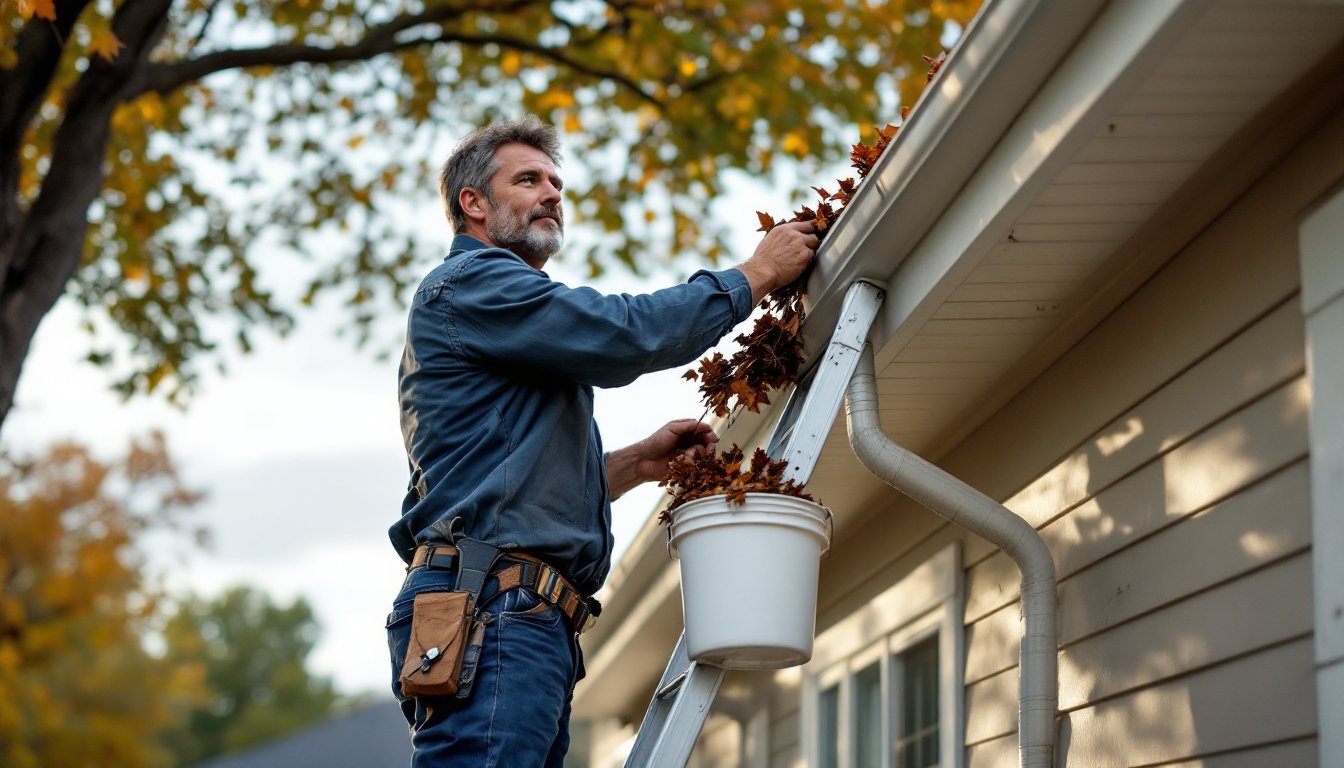
This is the non-negotiable cleaning. Fall leaf volume overwhelms gutters faster than any other debris type, and wet leaves form a cement-like mat that blocks water completely. In northern climates, trapped water freezes into ice dams that can lift shingles and force meltwater into the attic.
Timing fall cleaning is tricky. Too early and you’ll need to clean again in two weeks. Too late and you’re working in freezing temps or dealing with frozen blockages. Watch your largest deciduous trees, when they hit 75% leaf drop, schedule the cleaning.
What to prioritize in fall:
- Valley areas: Leaves accumulate where roof planes meet. Clear these sections first or they’ll wash into gutters during the first rain.
- Gutter guards: If you have mesh or foam inserts, remove and rinse them. Wet leaves plug the openings even on “maintenance-free” systems.
- Buried downspouts: If downspouts drain into underground lines, flush those too. Freeze-thaw cycles can crack buried pipes if they’re full of debris.
For homes surrounded by oak trees (which hold leaves into December), plan a second cleaning in late November or early December. Oaks are notorious for late drops, and their large leaves create instant blockages.
If you’re balancing multiple home maintenance tasks in fall, prioritize gutters over cosmetic projects, water damage compounds quickly once cold weather arrives.
Signs Your Gutters Need Immediate Cleaning
Don’t wait for the calendar if you see these warning signs:
- Overflow during light rain: If gutters spill over in a moderate storm, they’re severely clogged. Water should handle at least 1 inch per hour of rainfall.
- Sagging or pulling away from fascia: Wet debris weighs 4–6 pounds per linear foot. If gutters are visibly drooping, they need immediate clearing and possibly hanger reinforcement.
- Plant growth: Weeds, grass, or saplings sprouting from gutters mean organic material has been sitting long enough to decompose into soil. This indicates months of neglect.
- Staining on siding: Vertical dirt streaks below the gutter line mean water is overflowing and carrying debris with it. Check for rot behind the gutter as well.
- Basement moisture or foundation cracks: If your basement suddenly feels damp or you notice new foundation settling, check gutters and downspout extensions first. Improperly drained roof water is a leading cause of foundation issues.
- Pest activity: Mosquitoes breeding in standing water, birds nesting in debris, or carpenter ants trailing up the fascia all indicate clogged, wet gutters.
These issues don’t wait for spring or fall. Grab a ladder and clear the section immediately, even if it’s just a temporary fix until you can do a full cleaning.
How Climate and Location Affect Your Cleaning Schedule
Base cleaning frequency adjusts significantly depending on where you live and what’s growing nearby.
Cold climates (zones 3–5): Two cleanings minimum, late spring and late fall. Add a mid-winter check if you experience January thaws that refreeze into ice dams. Never clean gutters when ice is present: you’ll damage the gutter and risk injury.
Moderate climates (zones 6–8): Two to three cleanings. Spring and fall are mandatory. Add a mid-summer cleaning if you have large trees that drop seed pods or experience heavy pollen.
Warm/humid climates (zones 9–10): Three cleanings, potentially four. Organic material decomposes faster in heat and humidity, creating sludge that’s harder to remove. Rainy seasons (varies by region) require pre-season clearing.
Arid climates: You’d think desert homes need less maintenance, but dust, palm fronds, and monsoon debris require at least two annual cleanings. Fine dust mixed with occasional heavy rain creates concrete-like buildup.
Tree coverage multipliers:
- House surrounded by mature trees within 20 feet: Add one extra cleaning per year.
- Pine or fir trees overhead: Add cleanings after every major windstorm. Pine needles slip through most gutter guards and mat into dense clogs.
- No trees within 50 feet: You can often reduce to one annual cleaning, but don’t skip it, wind carries debris from blocks away.
Many experienced DIYers adjust their schedule after the first year by tracking when debris accumulates fastest on their specific property.
Creating Your Personal Gutter Maintenance Calendar
Generic advice only gets you so far. Build a custom schedule based on your home’s specific conditions.
Step 1: Map your debris sources
Walk your property and note every tree within 30 feet of the roofline. Identify species if possible (extension offices have free tree ID guides). Record when each drops material, flowering trees in spring, maples in early fall, oaks in late fall.
Step 2: Set two baseline cleanings
Start with late spring (first week of May) and mid-fall (first week of November). Mark these on your calendar as non-negotiable.
Step 3: Add conditional cleanings
Schedule checks (not full cleanings unless needed) after:
- Major storms with winds over 40 mph
- Extended droughts followed by first rain (debris washes down dry roof)
- Heavy snow melt
- Nearby tree removal or construction activity
Step 4: Prep and document
Each cleaning, take photos of problem areas and note how much debris you removed. If one section consistently fills faster, consider adding a second downspout or trimming overhanging branches. Keep a simple log, “NE corner, 3 buckets leaves, downspout clear” is enough.
Step 5: Reassess annually
After one year, you’ll see patterns. Maybe your gutters stay clear through summer, or maybe June storms bring down enough twigs to warrant a mid-season clean. Adjust the calendar based on real data, not assumptions.
Safety note: If your roof pitch exceeds 6/12 (6 inches of rise per 12 inches of run), consider hiring a pro. Steep roofs require fall protection equipment beyond what most DIYers own. Single-story ranches and low-slope roofs are manageable with a sturdy extension ladder and spotter on the ground.
Conclusion
Gutter cleaning isn’t glamorous, but it’s leveraged maintenance, two hours twice a year prevents thousands in water damage. Spring and fall cleanings handle the majority of homes, but adjust for your specific trees, climate, and roof configuration. Watch for overflow, sagging, or plant growth between scheduled cleanings, and address those immediately. Build a calendar based on your property’s actual debris patterns, not generic recommendations, and you’ll stay ahead of problems instead of reacting to them.