Table of Contents
ToggleNothing kills a morning routine faster than standing in ankle-deep shower water or watching a sink back up mid-shave. Clogged bathroom drains are among the most common household plumbing issues, and they rarely fix themselves. Hair, soap scum, toothpaste residue, and mineral deposits combine into stubborn blockages that slow drainage or stop it entirely. The good news? Most bathroom drain clogs can be cleared without a plumber, if you tackle them early and use the right approach. This guide walks through the causes, DIY solutions, and preventive steps to keep bathroom drains flowing smoothly year-round.
Key Takeaways
- Hair, soap scum, toothpaste residue, and mineral deposits are the primary causes of bathroom drain clogs, making early intervention critical to prevent serious blockages.
- The baking soda and vinegar method is an effective and non-toxic DIY solution for minor bathroom drain cleaning, costing just pennies and requiring only 30 to 45 minutes.
- Plungers and manual drain snakes ($10-$30) can clear most clogs mechanically without chemicals, though avoiding commercial drain cleaners prevents damage to older pipes and reduces safety risks.
- Install drain screens, flush with hot water weekly, and remove pop-up stopper buildup every 2-3 months to maintain bathroom drain health and prevent future blockages.
- Call a professional plumber if multiple drains clog simultaneously, water backs up into other fixtures, or foul odors persist, as these indicate problems beyond DIY scope like main sewer line obstructions.
Why Bathroom Drains Get Clogged
Bathroom drains face a unique mix of debris that plumbing in other parts of the house doesn’t encounter. Understanding what causes clogs helps prevent them and informs which cleaning method works best.
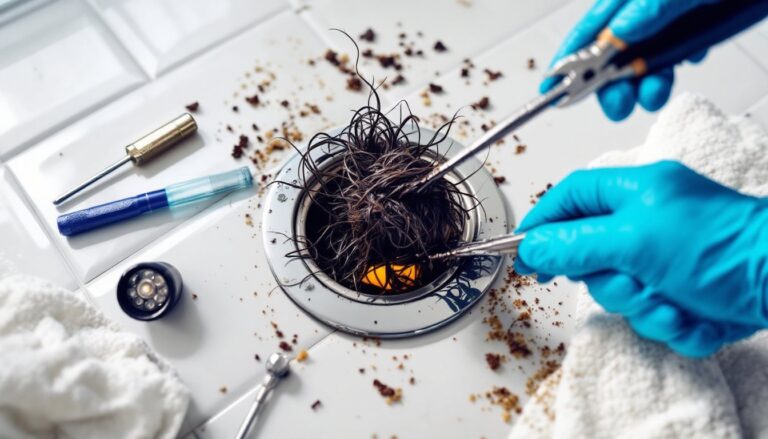
Hair is the primary culprit. A single shower can shed 50 to 100 strands, and each one grabs onto drain components, the stopper mechanism, crossbars in the P-trap, or rough pipe interiors. Over time, hair forms a net that catches everything else.
Soap scum is another major contributor. Traditional bar soaps contain fats that bind with minerals in hard water, creating a sticky, waxy film. This residue coats pipe walls and tangles with hair, turning a minor blockage into a solid mass. Liquid body washes reduce this issue but don’t eliminate it entirely.
Toothpaste, shaving cream, and facial cleansers add to the buildup. These products often contain oils, silicones, and thickening agents that don’t fully dissolve. They adhere to existing gunk and accelerate clog formation.
Mineral deposits from hard water are a slower but persistent problem. Calcium and magnesium crystallize inside pipes, narrowing the diameter over time. This doesn’t cause sudden blockages but makes drains more prone to clogging from other debris.
Small objects, earring backs, razor caps, cotton swabs, dental floss, occasionally drop into drains and lodge in the trap. These create anchor points for hair and soap to collect around.
Finally, older homes with cast iron or galvanized steel pipes develop rust and corrosion that roughens interior surfaces, giving debris more to cling to. PVC and ABS plastic pipes resist this but can still accumulate buildup at joints and bends.
DIY Methods for Cleaning Bathroom Drains
Most bathroom drain clogs respond well to DIY treatment, especially if caught early. Start with the gentlest method and escalate only if needed. Always wear rubber gloves and safety goggles when working with drains, you’ll be handling grime, and chemical splashes are a real risk if you use commercial cleaners.
The Boiling Water and Baking Soda Method
This approach works best for slow drains caused by soap scum and light grease buildup. It’s non-toxic, inexpensive, and won’t damage pipes when done correctly.
- Remove standing water from the sink or tub using a cup or wet vac. You need direct access to the drain opening.
- Pour half a cup of baking soda directly into the drain. Use a funnel if the opening is small. Let it sit for 5 minutes.
- Follow with one cup of white vinegar. The chemical reaction produces carbon dioxide foam that helps dislodge light buildup. Cover the drain with a wet rag or stopper to keep the reaction inside the pipe.
- Wait 15 to 30 minutes, then flush with a full kettle of boiling water (about 2 quarts). Pour slowly and steadily, rushing it can splash back.
Important: Skip the boiling water step if you have older PVC pipes or have recently used commercial drain cleaner. Boiling water can soften PVC joints, and mixing chemicals with vinegar can produce dangerous fumes.
This method won’t clear a full blockage, but it’s effective for routine maintenance and minor slowdowns. Repeat monthly to prevent buildup.
Using a Plunger or Drain Snake Effectively
When baking soda and vinegar don’t cut it, mechanical removal is next. These tools physically break up or extract the clog rather than dissolving it.
Plunging works for clogs in the trap or nearby pipes. Use a cup plunger (the standard type with a flat rim), not a flange plunger designed for toilets.
- Fill the sink or tub with 2 to 3 inches of water to create a seal.
- If the fixture has an overflow opening (most sinks and tubs do), block it with a wet rag or duct tape. This prevents air from escaping and ensures suction goes toward the clog.
- Place the plunger over the drain and press down firmly to expel air, then pull up sharply. Repeat 10 to 15 times with quick, forceful strokes.
- Remove the plunger and check drainage. If water drains, flush with hot tap water for a minute. If not, try again or move to a snake.
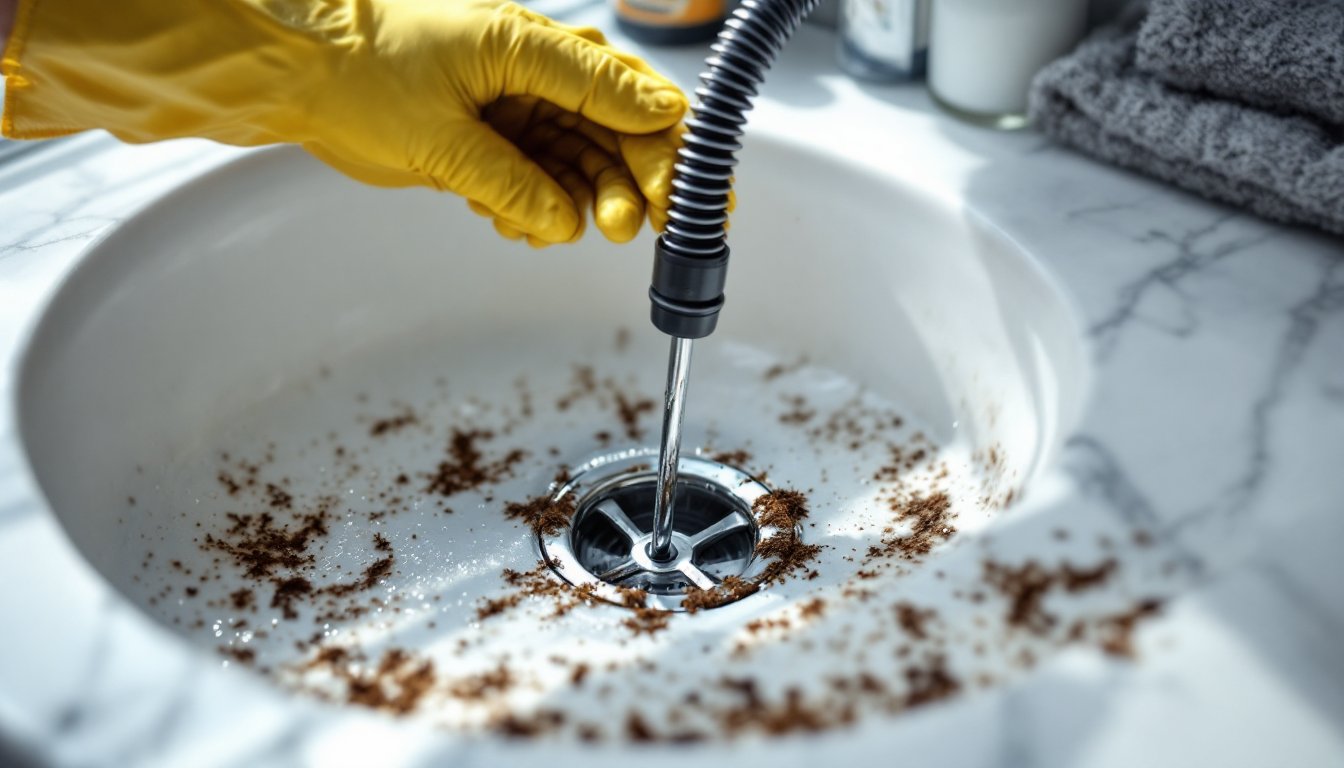
Drain snakes (also called augers) reach clogs that plungers can’t. A basic manual drum auger costs $10 to $30 and handles most bathroom clogs. For sink pop-up drains, you may need to remove the stopper first, most unscrew counterclockwise or have a pivot rod underneath the sink that releases them.
- Feed the snake cable into the drain slowly, turning the handle clockwise as you go. You’ll feel resistance when you hit the clog.
- Once you reach the blockage, alternate between pushing, pulling, and rotating. The goal is to either hook the clog or break it into pieces that can flush away. Many professional approaches to clearing drains follow this same technique.
- Pull the snake out carefully, hair and gunk will come with it. Have a plastic bag ready.
- Flush the drain with hot water for several minutes to clear residue.
Avoid chemical drain cleaners unless absolutely necessary. Products containing sodium hydroxide or sulfuric acid generate heat that can damage pipes, especially older metal or glued PVC joints. They’re also hazardous to handle and rarely outperform mechanical methods. If you do use them, follow label instructions exactly, never mix products, and ventilate the room well.
When to Call a Professional Plumber
Some drain issues are beyond DIY scope, or indicate larger problems that need a licensed plumber’s diagnostic tools and expertise.
Call a pro if:
- Multiple drains are clogged simultaneously. This suggests a blockage in the main sewer line or vent stack, not just a fixture trap. DIY methods won’t reach these.
- Water backs up into other fixtures when you run a sink or flush a toilet. This is a sign of a shared drain line obstruction or venting problem.
- You’ve snaked the drain repeatedly with no improvement. The clog may be beyond the reach of a hand auger, or there’s a structural issue like a collapsed pipe or root intrusion (more common in older homes with clay sewer lines).
- Foul odors persist even after cleaning. Sewer gas smell indicates a dry P-trap (easily fixed by running water), but persistent odors can signal a cracked pipe, improper venting, or biofilm buildup deep in the system.
- The drain makes gurgling sounds when water flows. This often means a venting issue, air can’t enter the system properly, creating negative pressure. Venting problems require access to roof stacks and knowledge of local plumbing codes.
- You see signs of a leak around the P-trap or drain assembly, water stains, warping, or mold. Don’t ignore this. Even small leaks cause structural damage and mold growth.
Professional plumbers use tools homeowners typically don’t own: motorized drain augers that reach 50+ feet into lines, hydro-jetting equipment that scours pipe interiors with high-pressure water, and video inspection cameras to diagnose problems without guesswork.
Expect to pay $150 to $300 for a standard drain cleaning service call in most U.S. markets, though prices vary by region and complexity. Sewer line work costs significantly more. Get a written estimate before approving work beyond basic snaking.
If your home was built before 1980 or you’ve had recurring drain issues, consider a video inspection during the service call. It’s an additional cost (often $100 to $200) but can reveal root intrusion, pipe corrosion, or improper slope that causes chronic clogs.
Preventive Maintenance to Keep Drains Flowing
Regular maintenance is far easier, and cheaper, than dealing with a full clog. These steps take minimal time and prevent most bathroom drain problems.
Install drain screens or hair catchers in every bathroom sink and tub. These inexpensive mesh or silicone covers ($3 to $10 each) trap hair before it enters the drain. Empty them weekly, more often if multiple people share the bathroom.
Flush drains weekly with hot water. After the last shower or sink use of the day, run hot tap water for 30 seconds. This helps dissolve soap residue and flush away debris before it accumulates. Not boiling water, just the hottest your tap produces.
Do a monthly baking soda and vinegar treatment as described earlier. Think of it as routine cleaning, not emergency response. Following a simple bathroom drain maintenance schedule keeps buildup from becoming a blockage.
Remove and clean pop-up stoppers every two to three months. Most twist off or are held by a pivot rod under the sink. Scrub off the hair and slime (it’s gross, but quick), then reinstall. This alone prevents many clogs.
Use less soap and switch to liquid formulas. Bar soap contributes more to buildup than liquid soap or body wash. If you prefer bar soap, consider installing a water softener if you have hard water, it reduces soap scum formation significantly.
Avoid pouring grease or oil down bathroom sinks. Face oils, coconut oil used for makeup removal, and oil-based cleansers solidify in pipes. Wipe them off with a tissue first.
Brush hair before showering. This removes loose strands that would otherwise wash down the drain.
For homes with hard water, an annual enzymatic drain treatment can help. These products (available at hardware stores for $10 to $20) use bacteria and enzymes to digest organic buildup without the harshness of chemical cleaners. Follow package directions, most require an overnight dwell time with no water use.
If you have teenagers or family members with long hair, consider a TubShroom or similar in-drain hair catcher. These fit inside the drain opening and are much more effective than flat screens, though they require weekly cleaning.
Conclusion
Bathroom drain clogs are inconvenient, but they’re rarely emergencies if you act early. Start with non-invasive methods like baking soda and vinegar, escalate to mechanical tools when needed, and call a plumber when the problem exceeds your reach or tools. More importantly, build a simple maintenance routine, drain screens, weekly hot water flushes, and monthly cleaning, so clogs never form in the first place. A few minutes of prevention beats an hour with a drain snake every time.