Table of Contents
ToggleSlow drains don’t fix themselves. What starts as a minor inconvenience, standing water in the shower, a kitchen sink that takes too long to empty, can escalate into a full-blown backup that leaves you ankle-deep in gray water. San Marcos homeowners deal with a unique mix of hard water, older plumbing in historic neighborhoods, and the occasional root intrusion from mature trees. Whether you’re tackling a slow drain yourself or need to know when it’s time to call in a professional, understanding the basics of drain cleaning saves time, money, and a lot of frustration.
Key Takeaways
- Recognize early warning signs like slow drainage, foul odors, and gurgling sounds to prevent emergencies and costly drain cleaning repairs.
- DIY drain cleaning methods including plungers, drain snakes, and natural solutions (baking soda, vinegar, boiling water) can fix minor clogs for $15–$30 instead of calling professionals.
- San Marcos homes are particularly susceptible to drainage problems due to hard water mineral buildup and root intrusion from mature trees, requiring tailored prevention strategies.
- Call a professional drain cleaning service for multiple fixtures backing up, sewage emergencies, or persistent clogs after DIY attempts, with costs ranging from $100–$600 depending on complexity.
- Prevent future drain clogs by installing screens, avoiding grease disposal, using biological drain cleaners monthly, and avoiding flushing non-toilet-paper items.
- Schedule professional drain cleaning every 18–24 months for older San Marcos homes to remove gradual buildup and avoid emergency situations.
Common Signs Your San Marcos Home Needs Drain Cleaning
Recognizing early warning signs prevents emergency plumber visits and potential water damage. These symptoms tell you there’s a problem developing in your drain lines:
Slow drainage is the most obvious indicator. If your sink, tub, or shower takes noticeably longer to drain than it used to, you’ve got a partial blockage forming. Don’t ignore it, partial clogs always get worse.
Recurring clogs in the same fixture mean you’re clearing symptoms, not the actual problem. If you’re plunging the same toilet every week or snaking the same bathroom sink monthly, there’s a persistent obstruction deeper in the line that needs addressing.
Multiple fixtures backing up simultaneously signals a main line issue, not an isolated clog. When flushing the toilet causes the shower drain to gurgle or the kitchen sink to back up, you’re dealing with a blockage in your main sewer line or a shared branch line serving multiple fixtures.
Foul odors coming from drains indicate organic buildup, hair, soap scum, food particles, and grease decomposing inside your pipes. This biofilm creates a breeding ground for bacteria and gets worse over time.
Gurgling sounds when water drains or when other fixtures run suggest trapped air in your plumbing. Air shouldn’t be in your drain lines: its presence means water can’t flow freely past an obstruction.
Water backing up in unexpected places is a red flag. If running the washing machine causes water to bubble up in the shower drain, your main line is compromised.
San Marcos’s hard water accelerates mineral buildup inside pipes, gradually narrowing the effective diameter. This makes homes here more susceptible to drainage problems than in areas with softer water.
DIY Drain Cleaning Methods That Actually Work
Most homeowners can handle minor clogs with the right approach and tools. Here’s what works, and what doesn’t.
Natural Solutions for Minor Clogs
For routine maintenance and light clogs, start with these methods before reaching for harsh chemicals:
Boiling water is surprisingly effective for kitchen sinks dealing with grease buildup. Boil a full kettle (about 8-12 cups) and pour it directly down the drain in two or three stages, waiting 10-15 seconds between pours. This works because it melts and flushes grease before it re-solidifies further down the line. Don’t use this method on PVC pipes, which can soften at temperatures above 175°F, stick with metal drainpipes.
Baking soda and vinegar creates fizzing action that can break up light organic clogs. Pour ½ cup baking soda down the drain, followed by ½ cup white vinegar. Cover the drain immediately with a wet cloth or stopper to keep the reaction contained in the pipe. Wait 30 minutes, then flush with hot water. Even though its popularity, this method’s effectiveness is limited, the reaction produces mostly carbon dioxide gas and water. It works best for deodorizing and minor buildup, not substantial clogs.
Salt and baking soda offers a slightly more abrasive approach. Mix ½ cup of each, pour down the drain, let it sit for several hours (overnight is better), then flush with boiling water. The coarse salt provides mild scouring action as it moves through the pipe.
Skip the chemical drain cleaners whenever possible. Products containing lye or sulfuric acid generate heat that can damage older pipes, especially if you have galvanized steel or PVC. They’re also environmental hazards and create dangerous fumes. If you’ve already used a chemical cleaner and it didn’t work, tell any plumber before they start work, caustic residue poses a serious safety risk.
Tools Every San Marcos Homeowner Should Have
Invest in proper tools instead of repeatedly buying chemical drain cleaners that don’t work:
A cup plunger (for sinks) and a flange plunger (for toilets) use hydraulic pressure to dislodge clogs. The technique matters: create a tight seal, fill the fixture with enough water to cover the plunger cup, then push and pull vigorously 15-20 times without breaking the seal. Many people maintain their plumbing systems year-round using this simple tool.
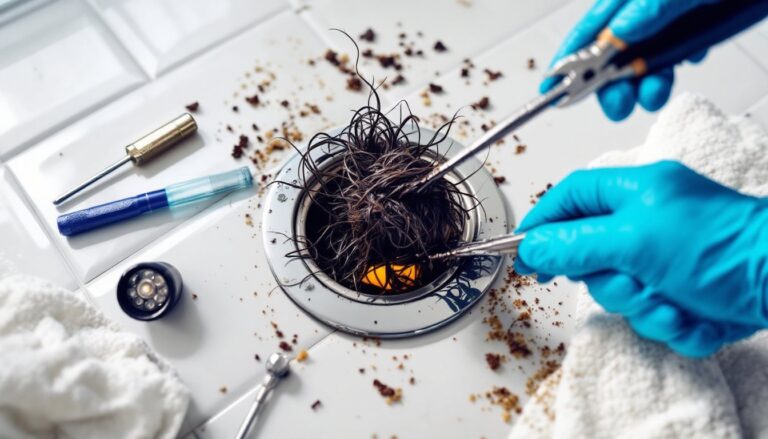
A drain snake (also called a drain auger) physically breaks through or retrieves clogs. A basic 25-foot manual snake costs $15-$30 and handles most bathroom sink and tub clogs caused by hair and soap buildup. Insert the cable, crank the handle clockwise as you push it forward, and work it back and forth when you hit resistance. You’ll feel the difference between hitting a clog (which gives way) and hitting a pipe fitting (which doesn’t). Pull the snake out slowly to bring the clog material with it.
**A closet auger is specifically designed for toilets. Its angled housing protects the porcelain from scratches while guiding the cable through the trap. Standard drain snakes can crack toilet bowls, don’t use one.
A wet/dry shop vacuum can sometimes pull out clogs that resist other methods. Set it to vacuum liquids, create the tightest seal possible over the drain opening, and run it at full power. This works surprisingly well for items accidentally dropped down drains, jewelry, toys, or other solid objects.
For homeowners comfortable with more aggressive DIY work, a power auger (electric or drill-powered) handles tougher clogs in main lines. These run $50-$150 for consumer models and require more care, they can punch through old pipes if used incorrectly.
When to Call a Professional Drain Cleaning Service
DIY has its limits. Some situations require professional equipment and expertise:
Multiple fixtures backing up indicates a main sewer line blockage. This requires a professional with a motorized sewer snake (typically 50-100 feet) and potentially a camera inspection to identify the problem. Tree roots are a common culprit in San Marcos, mature live oaks and other species send roots toward moisture sources, and even a small crack in your sewer line invites infiltration.
Repeated clogs in the same location after you’ve tried plunging and snaking suggest the problem is beyond your reach, either deeper in the line or caused by pipe damage, severe mineral buildup, or a bellied section of pipe where water pools.
Sewage backing up through floor drains, toilets, or other fixtures is an emergency. Don’t attempt to fix this yourself, raw sewage carries serious health risks. Shut off water to the affected areas and call a professional immediately.
Foreign objects lodged in pipes may require professional removal. If you’ve dropped something valuable or flushed something that shouldn’t have been flushed (toys, sanitary products, paper towels), a plumber with a camera inspection can locate and retrieve it without destroying your plumbing.
Old cast iron or galvanized pipes often need professional assessment. These materials deteriorate from the inside out, and what looks like a simple clog may actually be severe corrosion that requires pipe replacement, not just cleaning. Homeowners researching cost estimates for professional services often discover that addressing the underlying problem earlier saves money.
Professional drain cleaning in San Marcos typically costs $100-$300 for a standard service call addressing one or two drains, though prices vary based on accessibility, severity, and time of day (emergency after-hours calls cost more). Main sewer line cleaning runs $200-$600. Camera inspection adds $100-$200 but provides valuable information about pipe condition.
Hydro-jetting is the most thorough professional cleaning method. It uses high-pressure water (3,000-5,000 PSI) to scour the inside of pipes clean, removing grease, mineral scale, and even small root intrusions. It’s more expensive ($300-$600) but lasts longer than cable snaking. Not all pipes can handle hydro-jetting, old or damaged pipes may burst under pressure, which is why reputable companies inspect lines first.
San Marcos has several qualified professionals who can handle these more complex situations. Check licensing (Texas requires plumbers to be licensed through the Texas State Board of Plumbing Examiners), read recent reviews, and get written estimates before work begins.
Preventing Future Drain Clogs in Your Home
Preventive maintenance is cheaper and less disruptive than emergency drain cleaning. Here’s what actually works:
Install drain screens in every sink, tub, and shower. These inexpensive mesh or perforated metal screens ($3-$10 each) catch hair, food particles, and other debris before they enter your pipes. Clean them weekly, it takes 30 seconds and prevents most bathroom clogs.
Never pour grease down kitchen drains. This is the single most common cause of kitchen drain clogs. Grease is liquid when hot but solidifies as it cools, coating pipe walls and trapping other debris. Pour used cooking oil into a container, let it solidify, and throw it in the trash. Wipe greasy pans with paper towels before washing.
Run hot water after each kitchen sink use, especially after washing dishes. A 30-second flush helps carry soap and small particles through before they can accumulate.
Use biological drain cleaners monthly as preventive maintenance. Unlike chemical cleaners, these contain bacteria and enzymes that digest organic material in drains. They’re safe for all pipes, septic-friendly, and effective for ongoing maintenance. Pour them down drains at night when water use is minimal so they have time to work.
Be mindful of what goes down toilets. Only human waste and toilet paper should be flushed. “Flushable” wipes aren’t, they don’t break down like toilet paper and are a leading cause of sewer line clogs. Feminine hygiene products, dental floss, cotton swabs, and paper towels should go in the trash.
Clean pop-up stoppers and P-traps quarterly. Bathroom sink pop-ups accumulate disgusting amounts of hair and toothpaste scum. Unscrew the pivot rod under the sink, pull out the stopper, clean it thoroughly, and reinstall. Kitchen P-traps (the U-shaped pipe under the sink) collect food particles and grease, place a bucket underneath, unscrew the slip nuts, remove the trap, clean it out, and reinstall with fresh joint tape or new washers if they’re deteriorated.
Address hard water if you notice scale buildup. San Marcos water hardness averages 150-200 mg/L (moderately hard to hard), which means mineral deposits accumulate in pipes over time. A whole-house water softener ($400-$2,500 installed) prevents this buildup and extends the life of your plumbing, appliances, and water heater.
Avoid planting trees near sewer lines. If you’re landscaping, keep large trees at least 10 feet from underground pipes. Tree species with aggressive root systems (willows, poplars, silver maples) should be even further away. If you already have mature trees near your sewer line, periodic camera inspections can catch root intrusion before it becomes a major problem.
Schedule professional drain cleaning every 18-24 months for older homes or every 3-4 years for newer construction. This preventive service removes gradual buildup before it becomes a blockage.
Conclusion
Most drain problems start small and are fixable with basic tools and techniques. Pay attention to early warning signs, practice good drain hygiene, and know when a problem exceeds DIY limits. A $20 drain snake and five minutes of prevention beats a $500 emergency plumber call every time.