Table of Contents
ToggleClimbing a ladder twice a year to scoop out wet leaves and sludge isn’t anyone’s idea of a good weekend. Yet clogged gutters cause thousands of dollars in foundation damage, basement flooding, and roof rot. Enter the gutter cleaning vacuum, a ground-based or extension-mounted system that lets homeowners clear debris without scaling a roof line. These specialized shop vac attachments and dedicated gutter vacs have evolved significantly, offering better reach, stronger suction, and safer operation than ever before. Whether you’re dealing with pine needles, shingle grit, or compacted oak leaves, a vacuum system can turn a dreaded chore into a manageable task.
Key Takeaways
- A gutter cleaning vacuum eliminates dangerous ladder work by using ground-based suction to extract debris, reducing cleaning time by 50% compared to traditional hand-scooping methods.
- Gutter cleaning vacuum systems require at least 150 CFM airflow and 80 inches of water lift to handle wet leaves and compacted debris without repeated clogging.
- The optimal setup includes a 12-15 foot extension pole with a 90-degree angled nozzle, a 6-gallon wet/dry-rated canister, and a 2.5-inch hose to efficiently vacuum gutters without repositioning.
- Mid-range dedicated outdoor vacuums ($200–$350) offer better mobility and debris capacity than generic shop vacs, while premium purpose-built gutter vacs ($400–$600) include features like inspection cameras for two-story homes.
- Always clear downspouts first, work away from drain points, and inspect gutters for structural damage before using a gutter cleaning vacuum to prevent equipment damage and ensure safety.
- Seasonal rental of commercial-grade gutter cleaning equipment from local home improvement stores ($30–$50 per day) is a cost-effective alternative to purchase if you clean gutters only twice yearly.
What Is a Gutter Cleaning Vacuum and How Does It Work?
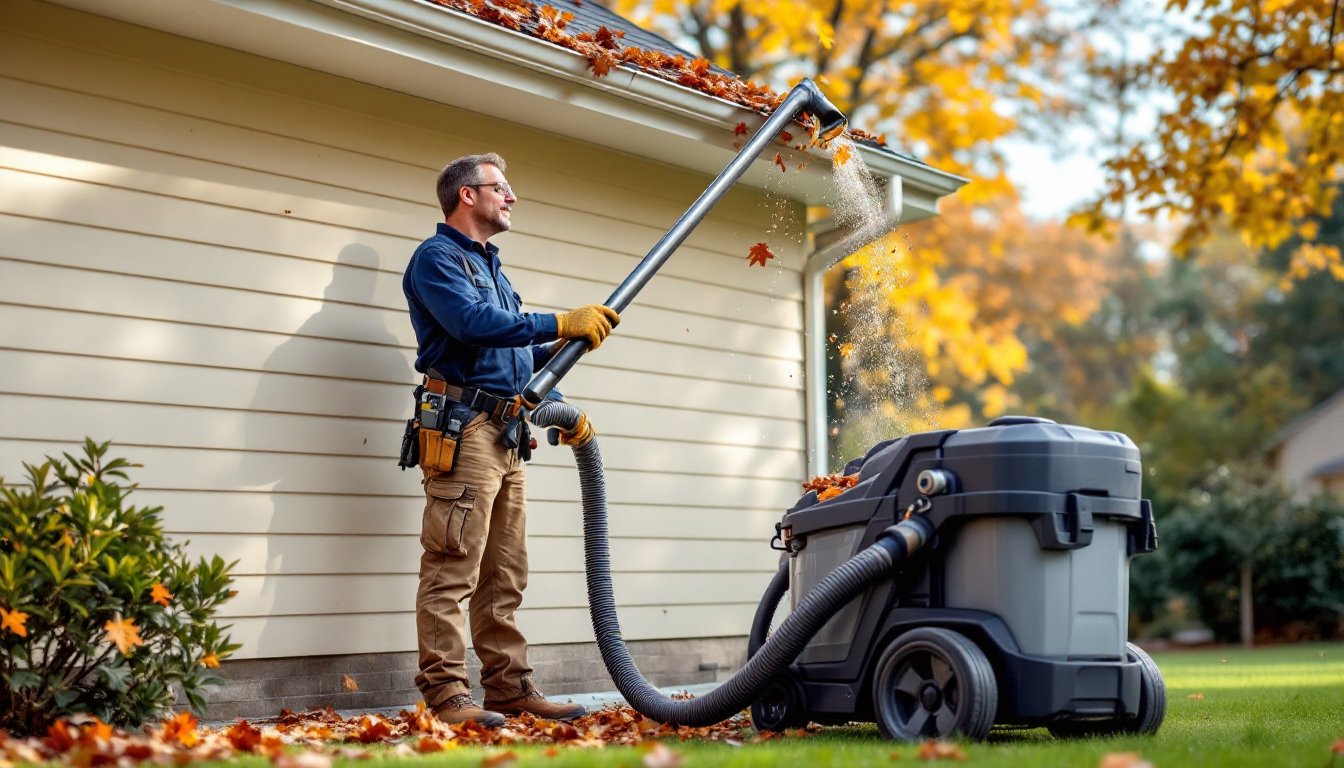
A gutter cleaning vacuum is essentially a wet/dry shop vacuum paired with extension tubes and a specialized nozzle designed to reach and extract debris from gutters while the user stands on the ground or a stable platform. Most systems consist of three core components: the vacuum unit itself (either a standard shop vac or a purpose-built outdoor model), telescoping or sectional extension poles (typically 6 to 15 feet in reach), and a curved or angled nozzle head that hooks into the gutter channel.
The physics are straightforward. The vacuum motor generates negative pressure, usually between 5 to 6.5 peak horsepower for residential models, that travels through the hose and pole assembly. When the nozzle is positioned inside the gutter, it pulls leaves, twigs, dirt, and standing water into the collection bag or canister. Wet/dry capability is non-negotiable here: standard household vacuums will burn out or short-circuit when they encounter moisture.
Some units include a blower function, which reverses airflow to dislodge compacted debris before switching back to vacuum mode. This two-stage approach works well for gutters that haven’t been cleaned in a year or more, where layers of decomposed organic matter have turned to sludge. The blow-then-suck method prevents clogging in the hose and keeps suction consistent.
One critical design element: the nozzle angle. Most gutter vac kits feature a 90-degree or adjustable elbow so the intake sits parallel to the gutter bottom rather than perpendicular. This allows the operator to slide the nozzle along the channel without repositioning the pole every few inches.
Why Choose a Vacuum Over Traditional Gutter Cleaning Methods?
The ladder-and-scoop method remains the default for many homeowners, but it’s also the leading cause of DIY injuries each fall. According to data compiled by Today’s Homeowner, ladder-related accidents account for a significant portion of seasonal emergency room visits during gutter cleaning season. A vacuum system eliminates the need to perch on a rung while leaning sideways to reach a downspout.
Beyond safety, vacuums offer speed and consistency. A manual cleanout on a typical single-story ranch might take 90 minutes with multiple ladder repositions, hand scooping, and bag trips to the compost pile. A vacuum setup can cut that time in half, especially on straight runs with minimal corners. You’re not stopping to climb down, move the ladder, and climb back up every eight feet.
Vacuums also handle wet debris better than scooping. After a rainstorm, gutters often hold an inch or two of standing water mixed with decomposed leaves. Trying to scoop that out by hand results in runoff down your sleeve and a sloppy mess on the ground. A wet/dry vac pulls it all into a sealed canister, keeping the cleanup contained.
That said, vacuums aren’t perfect for every situation. Gutters with heavy compaction, especially those clogged with shingle granules, acorns, or packed clay soil, may require manual removal of the worst blockages before a vacuum can work effectively. Similarly, if your gutters have sagging sections or loose downspout connections, you’ll need to address those structural issues first. A vacuum won’t fix a gutter that’s pulling away from the fascia.
For two-story homes, extension poles can reach most eaves, but visibility becomes an issue. You’re working blind unless you add a pole-mounted camera or inspection mirror, which some advanced kits now include.
Top Features to Look for in a Gutter Cleaning Vacuum
Not all wet/dry vacs are suited for gutter work, and not all gutter vac kits deliver on their marketing promises. Focus on these practical features before buying.
Extension Reach and Pole Systems
Pole length determines whether you can clean from the ground or still need a stepladder. For single-story homes with standard 10-foot eaves, a 12-foot working reach (pole plus user height) is usually adequate. Two-story homes require 15 feet or more, which means poles made from lightweight materials like fiberglass or aluminum. Avoid cheap plastic poles: they flex under suction and make precise positioning nearly impossible.
Look for poles with locking collars or twist-lock segments. Push-button locks are faster to adjust, but twist-locks hold tighter under load and don’t pop loose mid-job. Some kits use sectional poles (like painter’s extension poles) that screw together: these are sturdy but add bulk and make storage awkward.
A curved nozzle or gutter-specific attachment is non-negotiable. Straight nozzles force you to hold the pole at an uncomfortable angle and don’t hug the gutter bottom. Quality kits include multiple nozzle shapes, narrow tips for downspout clogs, wide scoops for open runs, and brush attachments for scrubbing out sludge.
Suction Power and Debris Capacity
Peak horsepower is the spec manufacturers love to tout, but it’s often misleading. What matters more is CFM (cubic feet per minute) and water lift, which measure airflow volume and vacuum strength respectively. For gutter cleaning, aim for at least 150 CFM and 80 inches of water lift. Lower numbers struggle with wet leaves and will clog repeatedly.
Canister size affects how often you stop to empty the tank. A 6-gallon capacity is the sweet spot for most homes, large enough to handle a full gutter run but not so heavy you can’t lift it when full of wet debris. Smaller 4-gallon units are fine for light maintenance but fill up fast during spring cleanouts.
Check the filtration system. Standard foam or paper filters will clog instantly when wet. You need a wet/dry-rated filter or a model that works without a filter in wet mode. Some higher-end units feature automatic filter cleaning that pulses air backward to knock debris off the filter surface, maintaining suction longer.
Hose diameter and length also impact performance. A 2.5-inch hose is standard, but thicker hoses reduce clogging and improve airflow. Length should match your pole reach, too short and you’re limited in how you position the vacuum base: too long and you lose suction. Most effective setups keep total hose-plus-pole length under 20 feet.
Noise is a practical concern if you’re working early on weekends or in a dense neighborhood. Gutter vacs run loud, typically 75 to 85 decibels, so hearing protection is mandatory, and checking local noise ordinances for weekend work is courteous.
How to Use a Gutter Cleaning Vacuum Safely and Effectively
Before you power up, walk the perimeter and inspect the gutters from the ground. Look for sagging sections, loose brackets, or areas where the fascia is rotted. A vacuum won’t fix structural problems, and putting pressure on a compromised mount could pull the gutter loose.
Start at a downspout and work away from it. This prevents you from vacuuming debris toward a clog and creating a backup. If the downspout is already blocked, clear it first, either with a plumber’s snake, a pressure washer, or by disassembling the elbow at the base. Tests done by Good Housekeeping confirm that clearing the downspout first significantly improves overall gutter cleaning efficiency.
Wear safety glasses and gloves, even though you’re on the ground. Debris can blow back out of the nozzle, especially if you hit a wet clump that breaks suction momentarily. Closed-toe boots with good tread are essential: you’re often working on uneven lawn or gravel while managing a long pole.
Insert the nozzle into the gutter at a shallow angle, then push it forward 6 to 12 inches at a time. Move slowly, rushing causes you to skip over debris or knock it past the nozzle rather than sucking it up. If suction drops suddenly, you’ve likely hit a clog in the hose or pole. Pull the nozzle out, turn off the vac, and check the tube sections. A straightened wire coat hanger works well for clearing blockages.
For two-story work, consider using a stepladder to reduce pole length rather than maxing out your extension. A 6-foot ladder plus a 10-foot pole is easier to control than a 16-foot pole from the ground. Just make sure the ladder is on firm, level ground and have a spotter if possible.
After vacuuming, flush the gutters with a hose to check for proper drainage and catch any debris you missed. This also rinses out residual sludge that a vacuum can’t always grab.
Empty the canister frequently, especially when working with wet material. A full tank loses suction, and wet leaves are heavy, an overfilled 6-gallon vac can weigh 50 pounds or more. Dump debris onto a tarp or directly into a yard waste bag to keep cleanup simple. According to Popular Mechanics, maintaining your vacuum’s filter between uses extends motor life and keeps suction strong for future projects.
Best Gutter Cleaning Vacuum Options for Different Budgets
Budget tier ($100–$180): Most homeowners start with a wet/dry shop vac they already own and add a gutter cleaning kit. Brands like Craftsman, Ridgid, and Stanley sell accessory kits with extension wands and curved nozzles for $40 to $60. This approach works if your existing vac has at least 5 HP and a 5-gallon capacity. The downside is that generic shop vacs are heavy to move around the yard, and standard hoses kink easily when extended.
Mid-range ($200–$350): Dedicated outdoor wet/dry vacuums with built-in blower functions and included gutter kits fall into this range. Look for models with large rear wheels for easier mobility, a longer power cord (25 feet minimum), and tool-free filter access. These units often have better debris capacity and stronger motors than entry-level shop vacs, cutting down on empty cycles.
Premium tier ($400–$600): Purpose-built gutter vacuums like those from Worx, Sun Joe, or Vacmaster come with telescoping carbon-fiber poles, multiple nozzle attachments, and high-CFM motors designed for continuous outdoor use. Some include pole-mounted inspection cameras or LED lights so you can see what you’re doing on second-story runs. These systems are worth the investment if you have a large property, multiple buildings, or gutters prone to heavy leaf accumulation.
What about cordless? Battery-powered wet/dry vacs are convenient for quick cleanups but generally lack the sustained suction and run time needed for full gutter maintenance. If you go cordless, make sure you have at least two 4.0Ah batteries on hand and expect to recharge mid-job on larger homes.
Used market: Gutter vacs hold value well and show up on local marketplaces regularly. Inspect hoses for cracks, test the motor for unusual noise, and confirm all pole sections and attachments are included. Replacement parts are readily available for major brands, so a missing nozzle isn’t a dealbreaker.
Consider seasonal rental if you only clean gutters twice a year. Home improvement stores rent commercial-grade wet/dry vacs for $30 to $50 per day, and some rent gutter-specific pole kits separately. Renting makes sense if storage space is tight or you’re testing whether a vacuum system works for your home before committing to a purchase.