Table of Contents
ToggleBosch dishwashers are workhorses, quiet, efficient, and reliable for years when properly maintained. But even the best appliances need regular attention. A neglected dishwasher can develop odors, leave residue on dishes, and eventually suffer mechanical issues that cut its lifespan short. Most homeowners don’t realize that dishwashers clean themselves only partially. Food particles, mineral deposits, and soap scum accumulate in hidden spots, reducing efficiency and causing problems that could’ve been avoided. This guide walks through everything needed to deep-clean a Bosch dishwasher and keep it running like new.
Key Takeaways
- Regular Bosch dishwasher cleaning prevents odors, residue buildup, and mechanical issues while extending the appliance’s lifespan from 10–15 years with proper maintenance.
- Clean the filter and drain monthly by removing the cylindrical micro-filter, rinsing debris, unclogging spray arms, and checking for hidden particles in the drain area.
- Run a monthly descaling cycle using white vinegar (2 cups on the top rack) followed by a hot water rinse with baking soda to eliminate mineral deposits and soap scum.
- Simple maintenance habits like running hot water before cycles, using rinse aid, and leaving the door slightly ajar after each use prevent most buildup and mildew growth.
- Bosch recommends low-sudsing detergents and scraping dishes rather than pre-rinsing to optimize wash performance and maintain efficiency in modern dishwasher cycles.
Why Regular Bosch Dishwasher Cleaning Is Essential
Dishwashers handle some of the dirtiest jobs in the kitchen, and that grime doesn’t just disappear. Over time, food debris clogs the filter and drain, forcing the pump to work harder. Mineral buildup from hard water coats the spray arms and heating element, reducing water pressure and drying performance. Soap residue accumulates along door seals and in the detergent dispenser, creating a breeding ground for mold and mildew.
Bosch models are engineered for durability, but their three-part filter system and condensation drying method mean they’re especially sensitive to clogs and mineral deposits. A dirty filter reduces water circulation, leaving dishes spotted or greasy. Scale buildup on the heating element can trigger error codes or cause the unit to shut down mid-cycle.
Routine cleaning prevents these issues and extends the appliance’s life. Most Bosch dishwashers last 10–15 years with proper care, but neglecting maintenance can cut that in half. Regular cleanings also improve wash quality, dishes come out cleaner, and the machine uses less energy when components aren’t fighting against buildup. Homeowners who follow seasonal maintenance checklists for appliances often catch small issues before they become expensive repairs.
What You’ll Need to Clean Your Bosch Dishwasher
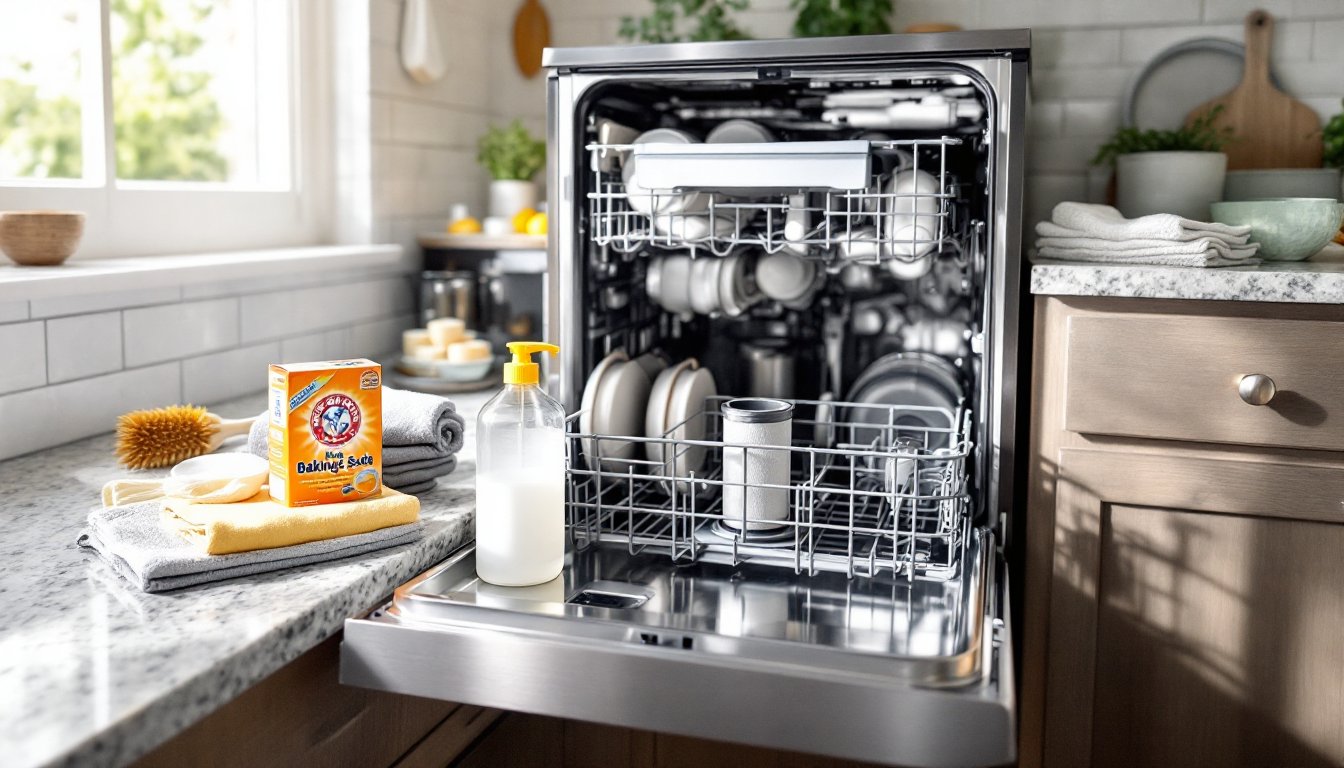
Gather these materials before starting. Most are kitchen staples, and none require specialty cleaners that cost more than they’re worth.
Cleaning supplies:
- White vinegar (distilled, not cleaning vinegar, it’s too acidic)
- Baking soda
- Dish soap (standard liquid, not dishwasher detergent)
- Soft-bristle brush or old toothbrush
- Microfiber cloths (lint-free)
- Small bowl or cup (dishwasher-safe)
- Toothpicks or wooden skewers (for clearing spray arm holes)
Optional but helpful:
- Bosch dishwasher cleaner tablets (if mineral buildup is severe)
- Rubber gloves
Safety note: Don’t mix vinegar with bleach or commercial cleaners containing chlorine. The combination produces toxic fumes. Stick to natural acids and bases for routine cleaning.
White vinegar works as a descaler and deodorizer. Baking soda tackles grease and absorbs odors. The soft brush handles scrubbing without scratching stainless steel interiors or plastic components. Avoid abrasive sponges or steel wool, they’ll damage door seals and tub surfaces.
Step-by-Step: Deep Cleaning Your Bosch Dishwasher
Cleaning the Filter and Drain
The filter is the first place to check. Bosch dishwashers use a cylindrical micro-filter housed in a coarse filter basket at the tub bottom. This system traps food particles before they reach the pump, but it needs manual cleaning, Bosch filters are not self-cleaning.
Step 1: Open the dishwasher door and remove the bottom rack.
Step 2: Locate the filter assembly in the center of the tub floor. Turn the cylindrical filter counterclockwise about a quarter-turn and lift it out. The coarse filter basket pulls straight up.
Step 3: Rinse both parts under hot running water. Use the soft-bristle brush to scrub away stuck-on debris. Food particles often wedge into the micro-filter’s mesh, work the brush gently to avoid tearing the screen.
Step 4: Check the drain area beneath the filter. Wipe away any sludge or debris with a damp cloth. Small bones, seeds, and fruit stickers commonly hide here.
Step 5: Inspect the spray arms. Pull the lower spray arm straight up, it should lift off easily. The upper arm may twist off or require a clip release, depending on the model. Hold each arm up to the light and look through the spray holes. Use a toothpick or skewer to clear any clogs. Hard water deposits often cement particles in place.
Step 6: Rinse the spray arms under hot water and reinstall them. Snap the filter assembly back into place, turning clockwise until it locks.
This process should take 10–15 minutes. Do it monthly for typical use, or every two weeks if the household runs heavy dish loads with lots of starches or proteins.
Deodorizing and Descaling the Interior
Even with a clean filter, dishwashers develop odors and scale. Bosch’s condensation drying method leaves moisture inside after cycles, creating ideal conditions for mildew if the door stays closed between uses.
Step 1: Place a dishwasher-safe bowl or cup filled with 2 cups of white vinegar on the top rack. Don’t add detergent or load any dishes.
Step 2: Run a full hot water cycle. The vinegar will circulate through the spray arms, breaking down grease, soap scum, and mineral deposits on the interior walls, door, and heating element. The acetic acid in vinegar dissolves limescale without damaging rubber seals or stainless steel.
Step 3: After the cycle finishes, open the door and sprinkle 1 cup of baking soda across the tub bottom.
Step 4: Run a short hot water cycle (or use the “Rinse” setting if available). Baking soda neutralizes any remaining odors and provides a gentle abrasive scrub.
Step 5: Wipe down the door edges, gasket, and detergent dispenser with a damp microfiber cloth. These areas collect soap residue and food splatter. The rubber door seal is a common spot for mold, clean it thoroughly, getting into the folds.
Step 6: If hard water stains persist, consider a Bosch-approved descaling tablet for the next cycle. These are formulated to target mineral buildup without voiding the warranty. Follow package directions, most recommend running the tablet through a hot cycle once every 3–6 months in areas with very hard water.
Pro tip: Leave the dishwasher door slightly ajar after each cycle to allow moisture to escape. This simple habit prevents mildew and extends gasket life. Many Bosch models feature AutoOpen Dry, which automatically pops the door open at the end of the cycle. If yours doesn’t have this, just crack it open manually.
Homeowners dealing with persistent hard water issues may benefit from reviewing appliance care tips for managing mineral deposits across multiple kitchen tools.
Maintaining Your Bosch Dishwasher Between Deep Cleans
Routine habits prevent most buildup and keep deep cleans from becoming major projects.
Run hot water before starting a cycle. Turn on the kitchen faucet and let it run until the water is hot before starting the dishwasher. This ensures the machine fills with hot water immediately, improving detergent activation and grease removal.
Scrape, don’t rinse, dishes. Bosch dishwashers are designed to handle food residue, modern detergents actually need some soil to activate enzymes. Scraping off large chunks is enough. Pre-rinsing wastes water and can leave dishes too clean for the detergent to work effectively.
Use the right detergent. Bosch recommends low-sudsing, phosphate-free detergents. Powder, gel, and pods all work, but avoid using more than the recommended amount. Excess detergent leaves residue and can cause oversudsing, which triggers error codes.
Check the rinse aid dispenser monthly. Rinse aid reduces spotting and improves drying, especially with Bosch’s condensation method. Keep the dispenser filled and adjust the dosage if dishes come out cloudy or too wet. Most Bosch models have a dial setting (1–6) for rinse aid release: start at 3 and adjust as needed.
Inspect door seals quarterly. Wipe the rubber gasket with a damp cloth and check for cracks or brittleness. A damaged seal lets water leak and reduces efficiency. Replacement seals are inexpensive and typically install with a screwdriver.
Run an empty hot cycle monthly. Even with regular use, some residue accumulates. A quick hot cycle with vinegar (1 cup in a bowl on the top rack) keeps things fresh.
Clean the exterior weekly. Stainless steel fronts show fingerprints. Wipe with a microfiber cloth dampened with water or a stainless cleaner, following the grain. Control panels need a gentle touch, avoid excess moisture near buttons or touchscreens.
Many kitchen organization strategies emphasize creating simple maintenance routines that prevent appliances from becoming neglected until problems arise. A few minutes of monthly attention saves hours of deep cleaning later.
Conclusion
A clean Bosch dishwasher is a reliable one. Regular filter maintenance, monthly descaling, and basic upkeep prevent the majority of issues that send appliances to the repair shop. These machines are built to last, but they need consistent attention to hit that 10–15 year lifespan. Set a monthly reminder, keep vinegar and baking soda on hand, and the dishwasher will keep delivering spotless dishes without drama.