Table of Contents
ToggleFresno’s Central Valley climate hits homes with a unique combination of challenges: blistering summer heat, valley oak debris, agricultural dust, and seasonal rain that can turn clogged gutters into a costly maintenance nightmare. Neglected gutters don’t just overflow, they rot fascia boards, erode foundation soil, and create perfect breeding grounds for pests. Whether you’re a hands-on homeowner ready to tackle the job yourself or weighing the cost of hiring a pro, understanding Fresno’s specific gutter maintenance needs will save you from expensive water damage repairs down the road. This guide walks through everything Fresno residents need to know about keeping gutters functional year-round.
Key Takeaways
- Gutter cleaning in Fresno is critical because the Central Valley’s unique climate—combining oak debris, agricultural dust, and seasonal rains—can cause foundation damage, fascia rot, and pest infestations if gutters remain clogged.
- Clean gutters at least twice yearly in Fresno: late October before rainy season and early April after spring pollen, with quarterly cleanings recommended for homes under trees like sycamores, mulberries, or pines.
- DIY gutter cleaning requires proper safety equipment including a Type II extension ladder with stabilizer, work gloves, safety glasses, dust mask, and tools like a gutter scoop and plumber’s snake for downspout clogs.
- Watch for standing water and overflow as primary warning signs of blockages, and always inspect gutters after windstorms above 25 mph, as Fresno’s spring winds can quickly re-fill recently cleaned gutters.
- Hire a professional gutter cleaning service if your home is two stories or higher, you have a steep roof pitch, structural damage is visible, or you’re uncomfortable working at heights, with Fresno pricing typically ranging from $100–$250 for single-story homes.
Why Gutter Cleaning Is Critical for Fresno Homeowners
Fresno sits in a valley surrounded by agricultural land and mature tree canopies, which means gutters collect more than just rainwater. Oak leaves, pine needles, sycamore seeds, and fine valley dust build up quickly, even during dry months. When winter rains arrive, typically November through March, clogged gutters can’t channel water away from the foundation. The result: soil erosion around slab foundations, basement or crawl space moisture intrusion, and staining on stucco or siding.
Foundation issues are particularly expensive in Fresno’s expansive clay soils. When water pools near the foundation during wet months, then the soil dries and contracts in summer heat, differential movement can crack slabs and shift footings. Preventing this starts with functional gutters and downspouts that direct water at least 6 feet away from the foundation.
Clogged gutters also add weight. Wet debris combined with standing water can exceed the load capacity of older gutter hangers, especially on homes with 5-inch K-style gutters installed before 2000. Sagging or detached sections let water run behind the fascia, rotting out the 1×6 or 1×8 fascia boards and the rafter tails they’re nailed to. That’s not a gutter repair, that’s carpentry work that requires scaffolding and replacement lumber.
Pest problems accelerate when gutters stay clogged. Mosquitoes breed in standing water, and roof rats, common in Fresno, use damp debris as nesting material. If you’ve noticed an uptick in rodent activity near the roofline, check the gutters first.
When to Clean Your Gutters in Fresno’s Climate
Fresno’s dry summers fool homeowners into thinking gutters can wait. They can’t. The best schedule for gutter cleaning in Fresno depends on your property’s tree coverage and the season.
Twice-yearly minimum: Clean gutters in late October before the rainy season and again in early April after valley oaks drop their spring pollen and catkins. Homes without nearby trees can often get by with this schedule.
Quarterly for tree-heavy properties: If your home sits under sycamores, mulberries, or pines, add cleanings in mid-July and late December. Pine needles are notorious for matting into dense mats that block downspout outlets even when the gutter trough looks clear.
After windstorms: Fresno gets occasional strong northwesterly winds, especially in spring. These knock down branches and blow debris into gutters that were clean a week earlier. A quick visual check after any wind event above 25 mph can save you from surprise overflow during the next rain.
Watch for overflow during irrigation or rain as your primary warning sign. If water spills over the gutter edge instead of exiting the downspout, you’ve got a blockage, either in the gutter run or inside the downspout itself. Don’t wait for the next storm to address it.
Many Fresno homeowners align gutter cleaning with HVAC filter changes or other seasonal maintenance tasks. Coupling it with roof inspections makes sense if you’re already pulling out the ladder.
DIY Gutter Cleaning: Step-by-Step Guide for Fresno Residents
Cleaning gutters yourself saves money and gives you a close look at your roof edge and fascia condition. But it requires the right equipment and a respect for ladder safety. Single-story homes are manageable for most DIYers: two-story homes require extension ladders and a comfort level with heights. If you’re uncertain, hire it out, home improvement projects shouldn’t put you in the emergency room.
Essential Tools and Safety Equipment
Start with a sturdy extension ladder rated for your weight plus 25 pounds of gear. Aluminum Type II ladders (225-pound capacity) are common, but Type I (250 pounds) or Type IA (300 pounds) provide extra margin. Set the ladder at a 75-degree angle, the base should be one foot out for every four feet of height.
Never lean an ladder directly against the gutter: use a ladder standoff (stabilizer) that rests against the wall or roof edge. This protects the gutter from denting and gives you clearance to work.
Safety gear:
- Work gloves: Leather or synthetic: gutter edges are sharp and debris hides wasp nests
- Safety glasses: Dried leaves and twigs flick up when you scoop
- Non-slip footwear: Boots with good tread: avoid sandals or smooth-sole shoes
- Dust mask or N95 respirator: Valley dust and decomposed organic matter irritate lungs
Tools for the job:
- Gutter scoop or garden trowel: Plastic scoops won’t scratch aluminum gutters
- 5-gallon bucket with a hook: Hang it from the ladder to collect debris (keeps it off landscaping)
- Garden hose with spray nozzle: For flushing after scooping
- Plumber’s snake or downspout auger: For clearing clogged downspouts
- Roof rake or leaf blower (optional): Clears debris before it enters gutters
The Cleaning Process From Start to Finish
Step 1: Clear the roof valley and edges
Before touching the gutters, use a roof rake or leaf blower to push debris off the roof edge. Material sitting above the gutter will wash right back in during the first rain.
Step 2: Scoop out the gutter trough
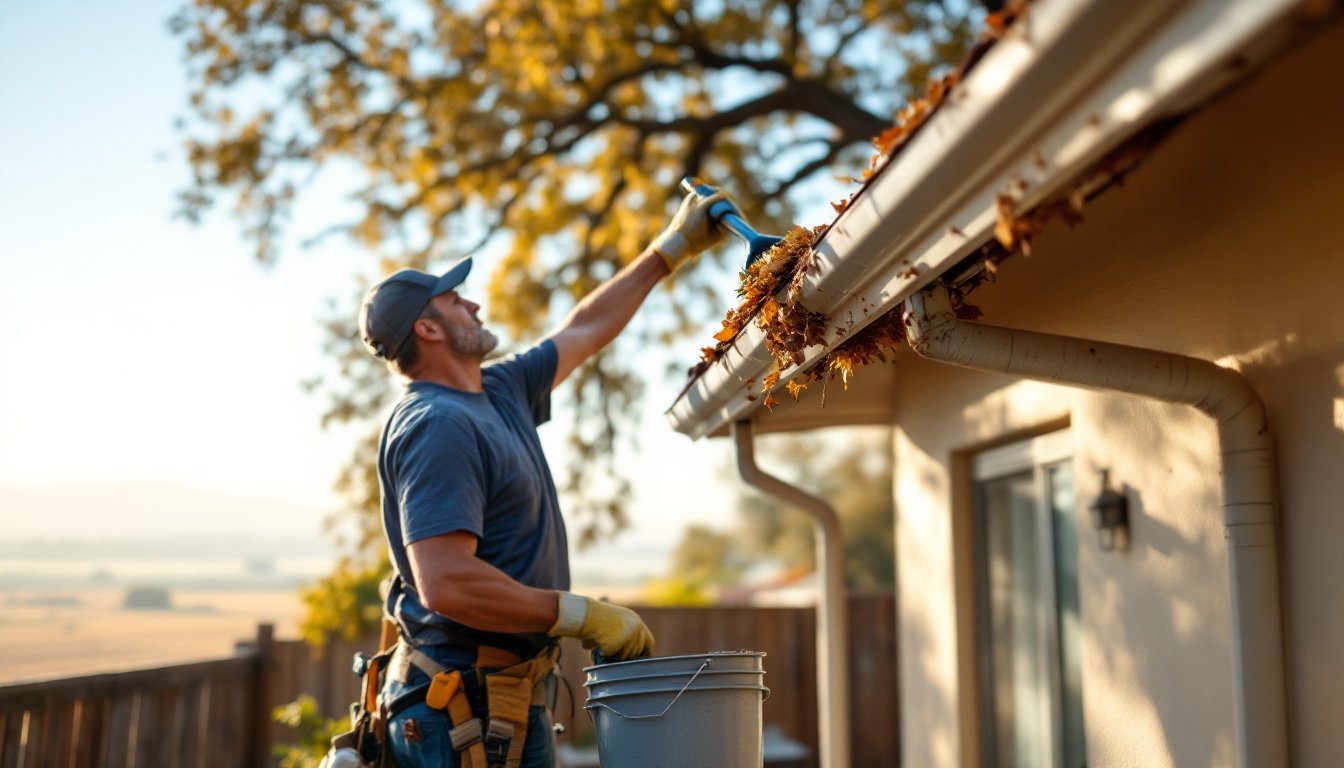
Starting at a downspout outlet, work away from it. Scoop debris into your bucket, not onto the ground (it’ll kill grass and flowerbeds). Remove everything down to the metal or vinyl bottom. You’ll encounter clumps of matted leaves, acorns, dirt, and sometimes bird nests.
Step 3: Flush with water
Once a section is clear, run the hose from the high end toward the downspout. Watch the flow, it should move steadily toward the outlet. Pooling water indicates a sag or incorrect slope (gutters should pitch 1/4 inch per 10 feet toward downspouts).
Step 4: Clear the downspouts
If water backs up at the downspout opening, you’ve got a clog. Spray water down from the top first. If that doesn’t work, remove the downspout elbow at the bottom and use a plumber’s snake or a stiff wire to break up the blockage from below. For stubborn clogs, tap the downspout with a rubber mallet while flushing, vibration often dislodges packed debris.
Step 5: Inspect and make notes
While you’re up there, check for:
- Loose or missing gutter hangers (should be spaced every 24 inches)
- Rust spots or holes (small holes can be patched with gutter sealant: larger ones need section replacement)
- Fascia damage behind the gutter (soft or discolored wood means water intrusion)
- Shingle condition at the roof edge (curling or missing shingles let water behind the gutter)
Mark problem areas with a photo on your phone. If you spot rotted fascia or compromised shingles, those are separate repairs that need addressing before the next rain.
Step 6: Reattach or replace hardware
If gutter sections are sagging, add hidden gutter hangers or fascia brackets to restore the pitch. These are inexpensive and install with a drill and self-tapping screws. Don’t over-tighten, aluminum gutters dent easily.
When to Hire a Professional Gutter Cleaning Service
Some gutter jobs are better left to pros, especially in Fresno where summer heat makes roof work dangerous and two-story homes are common.
Hire a professional if:
- Your home is two stories or higher: Extension ladders above 24 feet require experience and proper anchoring. The risk isn’t worth the savings.
- You’re uncomfortable on ladders: No shame in this. Falls from ladders send thousands of homeowners to ERs every year.
- Your roof pitch is steep (greater than 6/12): Accessing gutters on steep roofs often requires roof jacks or harnesses.
- You see structural damage: Rotted fascia, loose soffits, or sagging gutter sections indicate bigger problems that need a contractor’s assessment.
- Downspouts are embedded in walls or run through difficult-to-access areas: Some homes have internal downspouts that require specialized tools to clear.
- You lack the time or physical ability: Gutter cleaning is repetitive, hot work. If you’re managing other health conditions or a packed schedule, outsourcing makes sense.
Fresno has a competitive market for gutter cleaning services, with pricing typically ranging from $100 to $250 for a single-story home, depending on linear footage and tree debris volume. Two-story homes or properties with heavy buildup can run $200 to $400. Always get at least two quotes and verify the contractor is licensed and insured, California requires a contractor’s license for jobs over $500, but insurance matters even on smaller gigs.
Many pros offer add-on services worth considering:
- Gutter guards or screens: Reduce cleaning frequency (though they don’t eliminate it)
- Downspout extensions: Ensure water drains far enough from the foundation
- Minor repairs: Resealing joints, replacing hangers, patching small holes
- Roof debris removal: Clearing valleys and behind solar panels
Check reviews carefully. For project cost guidance, look for companies that include photos of before-and-after work and specify their process. Avoid anyone who quotes over the phone without seeing the property, gutter cleaning pricing depends on variables they can’t assess remotely.
Conclusion
Fresno gutter cleaning isn’t glamorous, but it’s one of the highest-return maintenance tasks a homeowner can do. Regular clearing prevents foundation damage, protects fascia and soffits, and keeps pests from nesting near the roofline. Whether tackling it yourself with a ladder and scoop or hiring a local service, staying ahead of debris buildup, especially before and after the rainy season, keeps a small job from becoming a structural headache.