Table of Contents
ToggleSlow drains don’t fix themselves. Whether it’s a sluggish kitchen sink or a shower that backs up mid-rinse, clogged drains are one of the most common, and most frustrating, problems McKinney homeowners face. The good news? Many drain issues can be tackled with basic tools and a little know-how, while others are best left to professionals with the right equipment. This guide walks through how to identify drain problems, what you can handle yourself, when to call in help, and how to keep your pipes clear year-round.
Key Takeaways
- Recognizing early warning signs like slow drainage, recurring clogs, foul odors, and gurgling sounds can prevent McKinney drain cleaning emergencies before they require expensive professional repairs.
- DIY drain cleaning methods—including natural solutions (baking soda and vinegar), mechanical tools (plungers and drain snakes), and P-trap removal—can resolve minor clogs without harsh chemicals that damage older pipes.
- Multiple fixtures backing up, sewage odors, or drainage problems in homes built before 1980 indicate serious blockages requiring professional drain cleaning services with hydro-jetting or motorized augers.
- McKinney’s hard water and mature oak or elm trees near sewer lines increase the risk of mineral scale buildup and root intrusion, making preventive maintenance and annual camera inspections valuable investments.
- Simple prevention habits—using drain screens, avoiding grease and non-flushable items, running hot water regularly, and scheduling monthly baking soda-vinegar flushes—can eliminate most drain issues before they start.
Common Signs Your McKinney Home Needs Drain Cleaning
Recognizing early warning signs can save homeowners time, money, and the headache of a full blockage. Here’s what to watch for:
Slow drainage is the most obvious red flag. If water pools in sinks, tubs, or showers and takes more than a few seconds to drain, there’s likely buildup in the pipes, grease, soap scum, hair, or mineral deposits from McKinney’s relatively hard water.
Recurring clogs in the same fixture suggest a deeper blockage or improper venting. A plunger might clear it temporarily, but if the problem returns within days or weeks, the root cause hasn’t been addressed.
Foul odors coming from drains often indicate organic matter decomposing in the pipes, food waste, grease, or biofilm. This is especially common in kitchen sinks and garbage disposals.
Gurgling sounds when water drains or when another fixture is used (like the toilet bubbling when the shower runs) point to venting issues or partial blockages that trap air in the system.
Multiple slow drains throughout the house suggest a problem in the main sewer line rather than individual fixtures. This often requires professional diagnosis, as it could involve tree root intrusion or a damaged pipe.
If you’re experiencing any combination of these signs, it’s time to take action before a minor inconvenience turns into an emergency.
DIY Drain Cleaning Methods for McKinney Homeowners
Before calling a pro, there are several methods homeowners can try with tools and materials most already have on hand or can pick up at a local hardware store.
Natural Cleaning Solutions
For mild clogs and routine maintenance, natural solutions are a safe first step, especially for older homes with galvanized or PVC pipes that harsh chemicals can damage over time.
Boiling water is the simplest method. Pour a full kettle of boiling water directly down the drain in a steady stream. This works best for grease buildup in kitchen sinks. Don’t use this method on PVC pipes if the water is truly boiling, let it cool to around 180°F to avoid softening the plastic.
Baking soda and vinegar is the classic DIY approach. Pour ½ cup of baking soda down the drain, followed by ½ cup of white vinegar. Cover the drain with a wet cloth or stopper and let the mixture fizz for 15–30 minutes, then flush with hot water. This helps break down organic matter and deodorize, though it won’t clear heavy blockages.
Salt and baking soda can tackle greasier clogs. Mix ½ cup of table salt with ½ cup of baking soda, pour it down the drain, and let it sit for several hours or overnight. Flush with boiling water. The abrasive texture helps scour pipe walls.
These methods work for minor slowdowns and preventive care, but they won’t handle hair clogs or foreign objects.
Mechanical Tools and Techniques
When natural solutions don’t cut it, it’s time for hands-on tools.
A cup plunger (the standard kind with a flat bottom) works for most sinks and tubs. Fill the basin with enough water to cover the plunger cup, block the overflow opening with a wet rag, and plunge with quick, forceful strokes. The key is creating a tight seal.
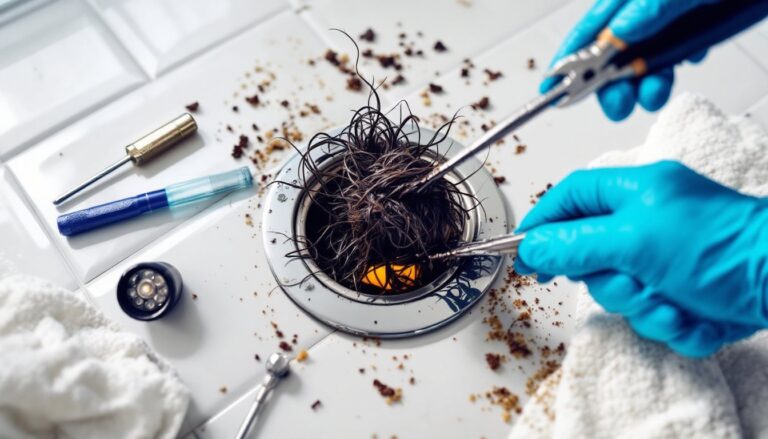
A drain snake (auger) is the go-to for hair and soap clogs in bathroom drains. Manual snakes cost $10–$25 and extend 15–25 feet into pipes. Feed the cable down the drain, turn the handle to break up or hook the clog, then pull it out. Wear gloves, what comes out isn’t pleasant. For deeper clogs, a 50-foot powered auger (available at rental centers) provides more reach and torque.
Removing the P-trap under sinks is often the fastest fix for blockages in that curved section of pipe. Place a bucket underneath, unscrew the slip nuts by hand or with adjustable pliers, and clear out any buildup. Inspect the gaskets while you’re at it, dry or cracked gaskets should be replaced.
Wet/dry shop vacs can pull out clogs when set to liquid mode. Create a seal around the drain opening with an old plunger head or wet towel, and run the vacuum on its highest setting. This works surprisingly well for solid obstructions.
Always wear safety goggles and rubber gloves when using mechanical tools, especially if chemical cleaners were previously used, residual chemicals can splash.
A word on chemical drain cleaners: While widely available, products containing sodium hydroxide (lye) or sulfuric acid can corrode pipes, especially older metal pipes or PVC joints. They’re also hazardous to skin and eyes, and they don’t work on complete blockages, they just sit in standing water. If you choose to use them, follow label directions exactly and never mix products. For persistent clogs, mechanical methods are safer and often more effective.
When to Call a Professional Drain Cleaner in McKinney
Some situations call for equipment and expertise beyond the DIY toolkit. Here’s when to bring in a licensed plumber.
Multiple fixtures backing up at once indicates a main sewer line problem. Tree roots are a common culprit in McKinney’s older neighborhoods, where mature oaks and elms send roots into clay or cast-iron sewer lines. Professional drain cleaners use motorized augers (up to 100 feet or more) and hydro-jetting equipment that blasts water at 3,000–4,000 PSI to clear roots and scale.
Recurring clogs in the same spot even though repeated DIY attempts suggest a structural issue, improper slope, bellied pipe, or damaged section. A plumber can run a video inspection camera to diagnose the exact problem and location.
Sewage odors or water backing up into the lowest drain in the house (often a basement floor drain or first-floor toilet) are signs of a serious blockage or septic system failure. Don’t ignore these, they can lead to sewage backups and water damage.
Old or fragile pipes (galvanized steel, Orangeburg, or early PVC) may not withstand aggressive DIY methods. If your home was built before 1980, consult a professional before using powered augers or high-pressure methods.
Commercial or rental properties should generally use licensed professionals for drain cleaning to ensure code compliance and proper documentation. Many local drain cleaning services offer same-day service and free estimates.
Professional drain cleaning in the McKinney area typically runs $150–$350 for standard service calls and camera inspections, with hydro-jetting costing $350–$600 depending on severity and access. Costs can be higher for emergency or after-hours service. Platforms like HomeAdvisor and ImproveNet offer cost calculators and contractor reviews to help homeowners compare options.
If a plumber discovers damaged pipes, repairs may involve permits, especially if the main sewer line crosses property boundaries or enters the city system. Always request proof of licensing and insurance before hiring.
Preventing Drain Clogs in Your McKinney Home
Prevention beats cure, especially when it comes to drains. A few simple habits can keep pipes flowing freely and reduce the need for reactive cleaning.
Use drain screens or strainers in all sinks, tubs, and showers. Mesh screens catch hair, food particles, and debris before they enter the pipes. Clean them weekly.
Never pour grease or cooking oil down the drain. Even if you run hot water afterward, grease solidifies as it cools in the pipes. Pour cooled grease into a can or jar and discard it in the trash.
Run hot water for 15–30 seconds after each sink use to flush residue through the pipes before it has a chance to accumulate.
Flush drains monthly with boiling water or a baking soda-vinegar treatment as routine maintenance, even if you’re not experiencing slowdowns.
Mind what goes in the garbage disposal. Avoid fibrous vegetables (celery, onion skins, corn husks), coffee grounds, eggshells, pasta, and rice, all of which can clump or expand in pipes. Run cold water before, during, and for 15 seconds after using the disposal to move waste through.
Install a lint trap on washing machine discharge hoses if your washer drains into a laundry sink or standpipe. Lint buildup is a common and overlooked cause of slow drains.
Schedule periodic professional maintenance if you have an older home, large trees near sewer lines, or have experienced repeated issues. An annual inspection with a camera can catch problems before they become emergencies.
McKinney’s water is moderately hard (around 120–180 ppm depending on your neighborhood’s water source), which can contribute to mineral scale buildup in pipes over time. Homeowners with hard water may benefit from occasional enzymatic drain cleaners that break down biofilm and organic residue without harsh chemicals.
Finally, teach everyone in the household what shouldn’t go down drains, dental floss, hair, cotton swabs, “flushable” wipes (they’re not truly flushable), feminine hygiene products, and paper towels. Most clogs are preventable with a little awareness.
Conclusion
Clear drains are one of those quiet conveniences you don’t appreciate until they’re gone. By spotting problems early, using the right tools, knowing when to call a pro, and practicing simple prevention habits, McKinney homeowners can keep their plumbing running smoothly and avoid costly surprises. When in doubt, address the issue sooner rather than later, what starts as a minor clog can escalate quickly.