Table of Contents
ToggleA grimy dishwasher filter doesn’t just slow down cleaning, it can leave food particles on supposedly clean dishes and cause unpleasant odors. Maytag dishwashers rely on a manual-clean filter system that traps debris before it recirculates through the spray arms. Unlike older models with self-cleaning grinders, these filters require regular maintenance to keep the machine running efficiently. Most homeowners overlook this simple task until they notice cloudy glasses or a lingering smell. The good news? Cleaning a Maytag dishwasher filter takes less than ten minutes and requires no special tools or technical knowledge.
Key Takeaways
- Cleaning a Maytag dishwasher filter takes less than 10 minutes and prevents cloudy dishes, food residue transfer, and foul odors caused by trapped food particle buildup.
- Clean your Maytag dishwasher filter monthly for average use, or every two weeks for heavy users, and watch for signs like spotted glassware or slow drainage that indicate it’s time for cleaning.
- Locate the cylindrical filter assembly at the bottom center of the tub beneath the lower spray arm, then twist counterclockwise to remove and rinse under warm water with a soft-bristle brush.
- Use only dish soap, warm water, and soft brushes—avoid steel wool or abrasive cleaners that scratch the mesh—and never run the filter through the dishwasher itself.
- Reinstall the Maytag dishwasher filter by aligning tabs, pressing down gently, and twisting clockwise until it locks; a filter that’s not seated properly allows debris to bypass filtration entirely.
- A clogged or dirty filter reduces water pressure, increases cycle time and energy consumption, and can lead to costly pump motor repairs if left unaddressed.
Why Regular Filter Cleaning Matters for Your Maytag Dishwasher
The filter in your Maytag dishwasher serves as the first line of defense against food particles, grease, and mineral deposits. It captures everything from rice grains to bacon grease before they can clog spray arms or coat your dishes with a greasy film.
When the filter gets clogged, water pressure drops, and the dishwasher has to work harder to push water through the spray arms. That means longer cycle times, higher energy consumption, and dishes that come out still dirty. In severe cases, a blocked filter can strain the pump motor and lead to costly repairs.
A clean filter also prevents cross-contamination during the wash cycle. Without proper filtration, food debris from the first rinse can settle back onto dishes during the final rinse. That’s how you end up with a “clean” glass that still has a coffee stain or a plate with dried-on pasta sauce.
Beyond performance, a dirty filter is the number-one cause of dishwasher odors. Trapped food particles begin to decompose within 24-48 hours, creating a sour or rotten smell that wafts out every time you open the door. Regular cleaning prevents this buildup and keeps your kitchen smelling fresh.
Locating Your Maytag Dishwasher Filter
Maytag dishwasher filters are located at the bottom of the tub, directly beneath the lower spray arm. You’ll find them in the center or toward the back of the tub floor, depending on your model.
To access the filter, first remove the lower dish rack completely. This gives you clear visibility and room to work. Look for a cylindrical or round assembly, most Maytag filters have two components: an upper filter assembly (the main cylindrical piece) and a lower flat filter that sits beneath it.
Some Maytag models feature a triple-filter system with an additional ultra-fine filter tucked inside the main assembly. This catches smaller particles and is typically removed along with the upper filter.
If you’re not sure which filter design your model uses, check the user manual or look for a small tab or arrow on the filter housing, that’s usually your removal guide. Most Maytag dishwashers manufactured after 2010 use a twist-and-lift design, though some older models may have a simple lift-out filter.
What You’ll Need to Clean Your Filter
Cleaning a Maytag dishwasher filter doesn’t require a trip to the hardware store. Most homeowners already have everything they need.
Materials:
- Dish soap (standard liquid detergent works fine)
- Warm water (not boiling, excessive heat can warp plastic components)
- Soft-bristle brush (an old toothbrush or a small vegetable brush)
- White vinegar (optional, for stubborn grease or mineral deposits)
- Microfiber cloth or sponge
- Small bowl or sink basin
Safety note: No gloves are strictly necessary for this task, but if you’re squeamish about handling trapped food debris, a pair of disposable nitrile gloves can make the job more pleasant.
Avoid using steel wool, scouring pads, or abrasive cleaners, these can scratch the filter mesh and reduce its effectiveness. Similarly, don’t run the filter through the dishwasher itself: the high heat and detergent concentration can degrade the plastic housing over time.
Step-by-Step: Removing and Cleaning Your Maytag Filter
Start by ensuring the dishwasher has finished its cycle and the interior has cooled. Open the door and pull out the lower dish rack completely.
Step 1: Remove the filter assembly
Locate the cylindrical filter assembly at the bottom of the tub. Most Maytag models require a quarter-turn counterclockwise to unlock the upper filter. Grasp the filter firmly, twist left (counterclockwise) until it stops, then lift straight up. The lower flat filter should lift out separately, simply pull it up from the tub floor.
If your model has an ultra-fine filter inside the main assembly, gently separate the two pieces by pulling them apart. Not all models have this third component, so don’t force anything.
Step 2: Rinse under running water
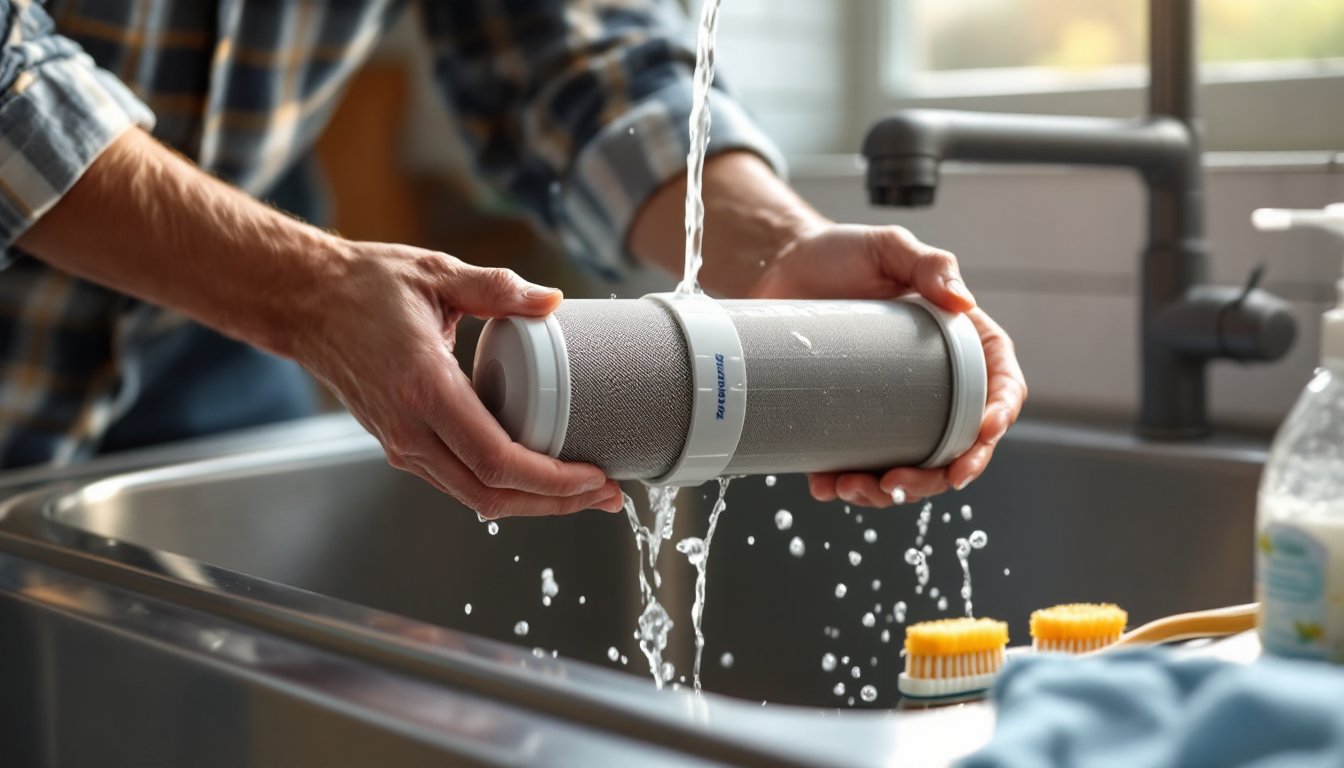
Hold the filter assembly under warm running water and rinse away loose debris. Use your fingers or a soft brush to dislodge stuck-on particles. For stubborn grease and grime, soak the filter in a solution of warm water and a few drops of dish soap for 10-15 minutes.
Step 3: Scrub the mesh and housing
Using a soft-bristle brush, scrub the filter mesh in a circular motion, working from the inside out. Pay special attention to the fine mesh screen, this is where grease and mineral buildup accumulate. If you notice white or cloudy residue (mineral deposits), soak the filter in a 50/50 mix of white vinegar and warm water for 20 minutes, then scrub again.
Step 4: Clean the filter housing and spray arm
While the filter is out, wipe down the filter housing at the bottom of the tub with a damp microfiber cloth. Remove any visible debris or slime. Check the lower spray arm for clogs, use a toothpick or small wire to clear any blocked spray holes.
Step 5: Rinse and inspect
Rinse all filter components thoroughly under running water to remove soap and loosened debris. Hold the filter up to the light and inspect the mesh, if you can’t see light through it, scrub again. A clean filter should have no visible food particles or greasy film.
Reinstalling the Filter Correctly
Reinstallation is just as important as cleaning. A filter that’s not seated properly can allow debris to bypass filtration entirely, defeating the purpose of the cleaning.
If your model has a multi-part filter, reassemble the upper and ultra-fine filters first by pressing them together until they click or seat firmly. Place the lower flat filter back into the tub floor first, it should sit flush with no gaps.
Next, position the upper filter assembly over the lower filter, aligning any tabs or arrows on the housing. Press down gently, then twist clockwise (to the right) until you feel it lock into place. Give it a gentle tug upward, it shouldn’t move. If it lifts easily, it’s not locked.
Slide the lower dish rack back in and run a rinse cycle to ensure everything’s working properly. According to experts at Today’s Home Owner, reinstalling the filter incorrectly is one of the most common mistakes homeowners make during maintenance.
How Often Should You Clean Your Maytag Dishwasher Filter?
The answer depends on how heavily you use your dishwasher and what kinds of loads you run.
For average household use (one load per day with moderate food residue), clean the filter once a month. If you scrape plates thoroughly before loading, you can sometimes stretch this to every six weeks.
Households that run the dishwasher twice a day or more, or those with large families, should clean the filter every two weeks. The same goes for homes that frequently wash heavily soiled pots, pans, or baking dishes.
If you notice any of the following signs between scheduled cleanings, it’s time to pull the filter:
- Visible food particles on supposedly clean dishes
- Cloudy or spotted glassware that wasn’t an issue before
- Slow drainage or standing water at the bottom of the tub after a cycle
- Foul odors when you open the dishwasher door
Some users adopt a habit of doing a quick filter rinse every week and a deep clean monthly. This approach works well in busy kitchens and prevents heavy buildup. Resources like The Kitchn often recommend building dishwasher maintenance into your regular kitchen cleaning routine to avoid forgetting.
Set a recurring calendar reminder on your phone or tie filter cleaning to another monthly task, like changing HVAC filters or checking smoke detectors, so it becomes automatic.
Troubleshooting Common Filter Issues
Even with regular cleaning, you might encounter a few hiccups. Here’s how to address the most common filter problems.
Filter won’t unlock or turn
If the filter feels stuck, don’t force it. Dried food or mineral deposits can glue the filter to the housing. Pour a cup of warm water directly onto the filter and let it sit for five minutes to loosen debris, then try twisting again. If it still won’t budge, apply gentle upward pressure while twisting.
Persistent odors after cleaning
If the filter looks clean but the dishwasher still smells, the odor may be coming from the drain hose, garbage disposal connection, or the sump area beneath the filter housing. Run a cleaning cycle with a dishwasher cleaner tablet or a cup of white vinegar placed on the top rack. Check that the drain hose isn’t kinked and that the garbage disposal (if connected) has been run recently.
Dishes still dirty after filter cleaning
A clean filter should restore wash performance, but if dishes are still coming out dirty, check the spray arms for clogs and ensure you’re using the correct detergent amount. Hard water can also interfere with cleaning, consider adding a rinse aid or using a water softener if your area has high mineral content.
Filter mesh is damaged or warped
Inspect the filter for cracks, tears, or warping. A damaged filter can’t trap debris effectively and should be replaced. Maytag replacement filters are available through appliance parts suppliers and typically cost $15-$35 depending on the model. Have your dishwasher’s model number handy when ordering, it’s usually on a sticker inside the door frame.
Water pooling at the bottom of the tub
If water doesn’t drain fully after a cycle, the filter may not be seated correctly, or the drain pump may be clogged. Remove and reinstall the filter, ensuring it locks into place. If pooling continues, check the drain hose and pump for obstructions, this may require accessing the dishwasher’s base, which is best left to a technician if you’re not comfortable working with appliances.
By keeping your Maytag dishwasher filter clean and addressing small issues before they escalate, you’ll extend the life of the appliance and ensure every load comes out spotless.