Table of Contents
ToggleClogged gutters don’t announce themselves until water’s already pouring over the fascia or pooling against your foundation. In Burlington, where seasonal weather swings from spring downpours to autumn leaf drops, neglected gutters become liabilities fast. This guide walks homeowners through everything they need to know: when to clean, how to clean safely, and when to call in reinforcements. Whether you’re climbing the ladder yourself or hiring a local service, understanding the why and how of gutter maintenance protects your home’s structural integrity year-round.
Key Takeaways
- Gutter cleaning in Burlington should occur at least twice yearly—late spring and mid-to-late fall—to prevent water overflow, foundation damage, and ice dam formation.
- DIY gutter cleaning requires proper safety gear, a stable ladder, and clear tools like scoops and garden hoses, with a helper nearby to prevent falls and injuries.
- Professional gutter cleaning services in Burlington typically cost $100–$250 for single-story homes; verify liability insurance, references, and included services before hiring.
- Warning signs like water spilling over gutters, sagging sections, foundation cracks, and plants growing in gutters indicate immediate attention is needed to avoid costly repairs.
- Installing gutter guards, trimming overhanging branches, extending downspouts away from foundations, and sealing seams prevent future clogs and extend system lifespan.
- Neglected gutters can lead to foundation damage costing thousands to repair, making routine maintenance far more cost-effective than emergency fixes.
Why Gutter Cleaning Is Essential for Burlington Homeowners
Gutters exist to channel rainwater and snowmelt away from your foundation, siding, and landscaping. When debris accumulates, leaves, shingle grit, pine needles, even tennis balls, water overflows instead of draining. That overflow erodes soil around the foundation, seeps into basements, and rots fascia boards and soffits.
Burlington’s climate compounds the issue. Heavy spring rains test gutter capacity right when trees drop seed pods and early blooms. Fall brings maple, oak, and birch leaves that mat together when wet, forming dams inside downspouts. Winter freeze-thaw cycles turn trapped water into ice, adding weight that can pull gutters loose from the roofline.
Ignored gutters also become breeding grounds for mosquitoes and nesting sites for wasps. Water stains on siding signal that runoff is hitting the house instead of the ground. Foundation cracks from hydrostatic pressure can cost thousands to repair, far more than routine gutter maintenance. Regular cleaning preserves the roof edge, protects paint and trim, and keeps water where it belongs: away from your home’s structure.
When to Clean Your Gutters in Burlington’s Climate
Most Burlington homes need cleaning at least twice a year: late spring (after trees finish dropping seeds and flowers) and mid-to-late fall (after leaf drop but before the first hard freeze). Homes surrounded by mature trees, especially maples, oaks, or evergreens, should plan for three or even four cleanings.
Spring cleaning prevents summer storm overflow. By May, gutters often hold a winter’s worth of decomposed organic matter plus fresh pollen and seed debris. A single thunderstorm can overwhelm clogged systems, sending water straight down the foundation wall.
Fall cleaning is non-negotiable. Leaves drop fast in October and November, and wet leaf packs cement themselves into corners and downspout elbows. Clean gutters before December to avoid ice dam formation. Ice dams occur when trapped water refreezes, forcing meltwater under shingles and into the attic.
Mid-season inspections matter, too. After major storms, walk the roofline and check for standing water or visible debris piles. If you see saplings sprouting in your gutters, you’ve waited too long. Homeowners managing project planning tools for seasonal maintenance should mark gutter inspections alongside HVAC service and furnace filter changes.
DIY Gutter Cleaning: A Step-by-Step Guide for Burlington Homes
Safety Precautions and Tools You’ll Need
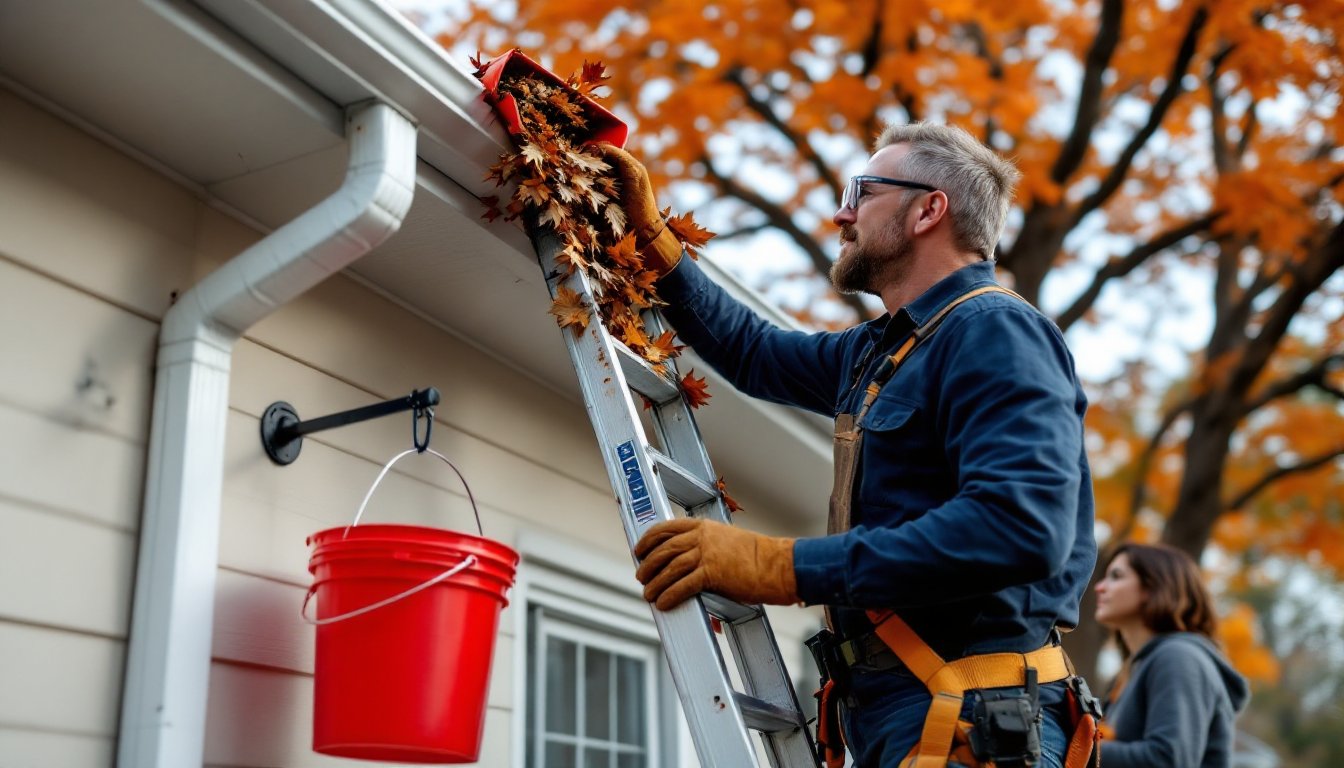
Safety gear is non-negotiable. Wear heavy-duty work gloves (leather or rubberized) to protect against sharp debris and rusty gutter nails. Safety glasses prevent splashback and debris from hitting your eyes. Use a Type I or Type IA extension ladder rated for your weight plus 20 pounds of gear. Position the ladder on firm, level ground and never lean it directly against vinyl or aluminum gutters, use a ladder standoff to protect the gutter edge and improve stability.
Essential tools:
- Gutter scoop or garden trowel (plastic scoops won’t scratch gutter bottoms)
- Five-gallon bucket with a hook or a tarp laid on the ground below
- Garden hose with spray nozzle for flushing
- Plumber’s snake or pressure washer attachment for stubborn downspout clogs
- Sturdy work boots with slip-resistant soles
Never work on a ladder alone. Have someone nearby to stabilize the base and hand you tools. Avoid overreaching, move the ladder frequently rather than stretching sideways.
Step-by-step process:
-
Remove large debris by hand or scoop. Start near a downspout and work away from it, scooping wet leaves and sludge into your bucket. Don’t drop debris on the ground if you can avoid it, you’ll just have to rake it up later.
-
Flush gutters with a hose. Once the bulk is out, spray water toward the downspout to check flow. Water should drain steadily without pooling. If it backs up, you’ve got a clog.
-
Clear downspout blockages. Disconnect the lower elbow if accessible and use a plumber’s snake or pressure washer wand (on low setting) to push clogs through from the top. Running water should exit freely at ground level.
-
Check gutter slope and fasteners. Gutters should pitch slightly toward downspouts, about ¼ inch per 10 feet. Standing water after flushing means the pitch is off or the gutter is sagging. Tighten loose fascia brackets or replace any that have pulled away.
-
Inspect for damage. Look for rust holes, separated seams, or cracked end caps. Small holes can be patched with gutter sealant or aluminum repair tape: larger damage may require section replacement.
Many Burlington homeowners use this process as part of broader seasonal maintenance, often coordinating with tasks listed on home repair advice platforms that track contractor availability for follow-up work.
Signs Your Burlington Gutters Need Immediate Attention
Water spilling over the gutter edge during rain is the most obvious red flag. If you see waterfalls mid-gutter rather than at downspouts, debris is blocking flow.
Sagging or pulling away from the fascia indicates either accumulated weight (ice, wet leaves, or standing water) or failed hangers. Gutters should sit flush and level: visible gaps mean fasteners have loosened or rotted through the fascia board.
Stains or mildew on siding below the roofline signal chronic overflow. Water running down the house exterior damages paint, promotes rot, and can infiltrate wall cavities.
Foundation cracks or basement moisture often trace back to gutter failure. When downspouts dump water within three feet of the foundation, hydrostatic pressure builds in the soil, cracking concrete and forcing water through basement walls.
Plants growing in gutters mean organic matter has been sitting long enough to decompose into soil. Moss, weeds, or even small trees indicate months (or years) of neglect.
Peeling paint or rust spots on the gutter exterior suggest water is sitting inside and overflowing, keeping metal constantly wet. Aluminum gutters develop white oxidation: steel gutters rust through.
Any of these signs warrant immediate cleaning or repair. Delaying turns a $100 cleaning job into a $1,000+ fascia replacement or foundation repair.
Choosing a Professional Gutter Cleaning Service in Burlington
When heights aren’t your thing, or your home is multi-story with steep rooflines, hiring a pro makes sense. Professional gutter services in Burlington typically charge $100 to $250 for a standard single-story home, with prices climbing for two-story homes, extensive tree coverage, or heavy debris buildup. Always get quotes from at least three providers.
What to look for:
- Proof of liability insurance and workers’ comp coverage. Gutter work involves ladders and roofs: uninsured contractors put your homeowner’s policy at risk if someone gets hurt.
- References or online reviews. Check ratings on platforms that aggregate contractor matching services and local business listings. Look for consistent feedback about punctuality, thoroughness, and cleanup.
- Included services. Basic cleaning should cover debris removal, downspout flushing, and minor adjustments to hangers or slope. Some companies offer gutter guard installation, roof moss treatment, or fascia inspection for an additional fee.
- Guarantees. Reputable services guarantee their work, if a downspout clogs within a week of cleaning, they’ll return at no charge.
Questions to ask before hiring:
- Do you provide before-and-after photos?
- Will you inspect and report any damage (rust, loose fasteners, damaged end caps)?
- How do you handle disposal of debris?
- Is seasonal maintenance available on contract (often discounted vs. one-off visits)?
Avoid door-to-door “we’re in the neighborhood” offers unless you can verify credentials on the spot. Licensed, insured pros don’t need to cold-call.
Preventing Future Gutter Problems: Maintenance Tips
Install gutter guards. Mesh screens, foam inserts, or reverse-curve covers reduce debris entry. No system is 100% maintenance-free, fine sediment and shingle grit still get through, but guards cut cleaning frequency from twice a year to once every two years. Micro-mesh guards work best in Burlington’s leaf-heavy environment but cost more upfront ($8 to $12 per linear foot installed).
Trim overhanging branches. Branches within six feet of the roofline drop leaves, twigs, and seeds directly into gutters. Trimming also reduces squirrel and raccoon access to your roof.
Extend downspouts away from the foundation. Downspout extensions or splash blocks should direct water at least four to six feet away from the house. Buried drainage lines that terminate at the property edge are even better but require trenching and may need a permit if they discharge near a municipal right-of-way.
Check slope annually. Gutters settle over time as fascia wood shrinks or fasteners loosen. A quick visual inspection after cleaning confirms that water still pitches toward downspouts. Adjusting slope is a simple fix: loosen hangers, reposition the gutter, and refasten.
Seal seams and end caps. Most gutter leaks occur at joints between sections or at end caps. Apply gutter sealant (available in caulk tubes at any hardware store) to the inside seam, let it cure, then test with a hose.
Schedule seasonal inspections. Even with guards, an annual check (spring or fall) catches small problems before they escalate. Look for rust, loose fasteners, and proper drainage. Mark your calendar or bundle it with other seasonal tasks like furnace maintenance or exterior caulking.
Consistent upkeep turns gutter cleaning from an emergency repair into a routine chore. Burlington homeowners who stay on top of seasonal maintenance avoid the costly surprises that come from years of neglect.